At present, the molecular weight, thermal properties, mechanical properties and other indicators of special engineering plastics produced by domestic polymer material enterprises are almost comparable to those of resins produced in the United States and Japan. However, in terms of resin purity, domestic enterprises generally use water washing and filtration to remove resin impurities. Due to the limitations of their process characteristics, they cannot completely solve the problem of low resin purity. The final resin products still have issues such as high impurity content and insufficient whiteness. The impurities are mostly chlorides, catalyst residues, polymerization mother liquor residues, and incompletely polymerized substances. Low resin purity will affect downstream enterprises' use of the resin in injection molding and fiber spinning, leading to problems such as low yield of finished products, poor mechanical properties, and unqualified product color.
After solid-liquid separation of the products from the polymerization reaction of special engineering plastics, the filter cake mainly consists of synthetic resin, NMP (solvent) attached to it, NaCl (by-product waste salt), and a very small amount of oligomers. To obtain pure finished resin, refined purification treatment is generally adopted, and the process steps are as follows:(1) Solid-liquid separation of polymer slurry: Put the slurry synthesized by polymerization reaction into an isobaric discharge tank, cool it down, and then put it into a high-speed centrifuge for the first solid-liquid separation to obtain semi-finished resin; (Material transfer: Discharge tank → Centrifuge, manual open operation)(2) Solvent purification to remove oligomers: Transfer the semi-finished resin obtained from solid-liquid separation to a purification kettle, add solvent, and stir to dissolve oligomers; Put the purified resin into a high-speed centrifuge for solid-liquid separation to obtain purified semi-finished resin; (Material transfer: Centrifuge → Purification kettle → Centrifuge, manual open operation)(3) Crushing: Put the purified semi-finished resin into a crusher to crush the material into uniform solid resin particles with a particle size of 50-60 microns; (Material transfer: Centrifuge → Crusher, manual open operation)(4) Rinsing: Put the crushed resin into a settling tank, add pure water for settling and washing. The washing time is 2-4 hours to rinse out the oil-phase impurities in the resin; (Material transfer: Crusher → Settling tank, manual open operation)(5) Washing: Put the rinsed resin into a salt washing machine, add pure water for washing for 3-5 hours to remove impurities on the resin surface; (Material transfer: Settling tank → Centrifuge, manual open operation)(6) Soaking: Send the washed resin to a semi-finished slurry tank, add pure water for soaking for 3-5 hours to remove residual impurities in the resin pores; (Material transfer: Centrifuge → Washing tank, manual open operation)(7) Centrifuge filtration: Put the semi-finished slurry after soaking into a high-speed centrifuge for solid-liquid separation to obtain high-purity semi-finished resin; (Material transfer: Washing tank → Centrifuge, manual open operation)(8) Low-temperature drying: Put the high-purity semi-finished resin obtained from solid-liquid separation into multiple double-cone vacuum dryers. The vacuum degree is -0.06 to -0.09 MPa, the heating is low-pressure steam of 3-5 kg, and the drying time is 90-200 minutes to obtain high-purity finished special engineering plastics. (Material transfer: Centrifuge → Multiple batch dryers, manual open operation)
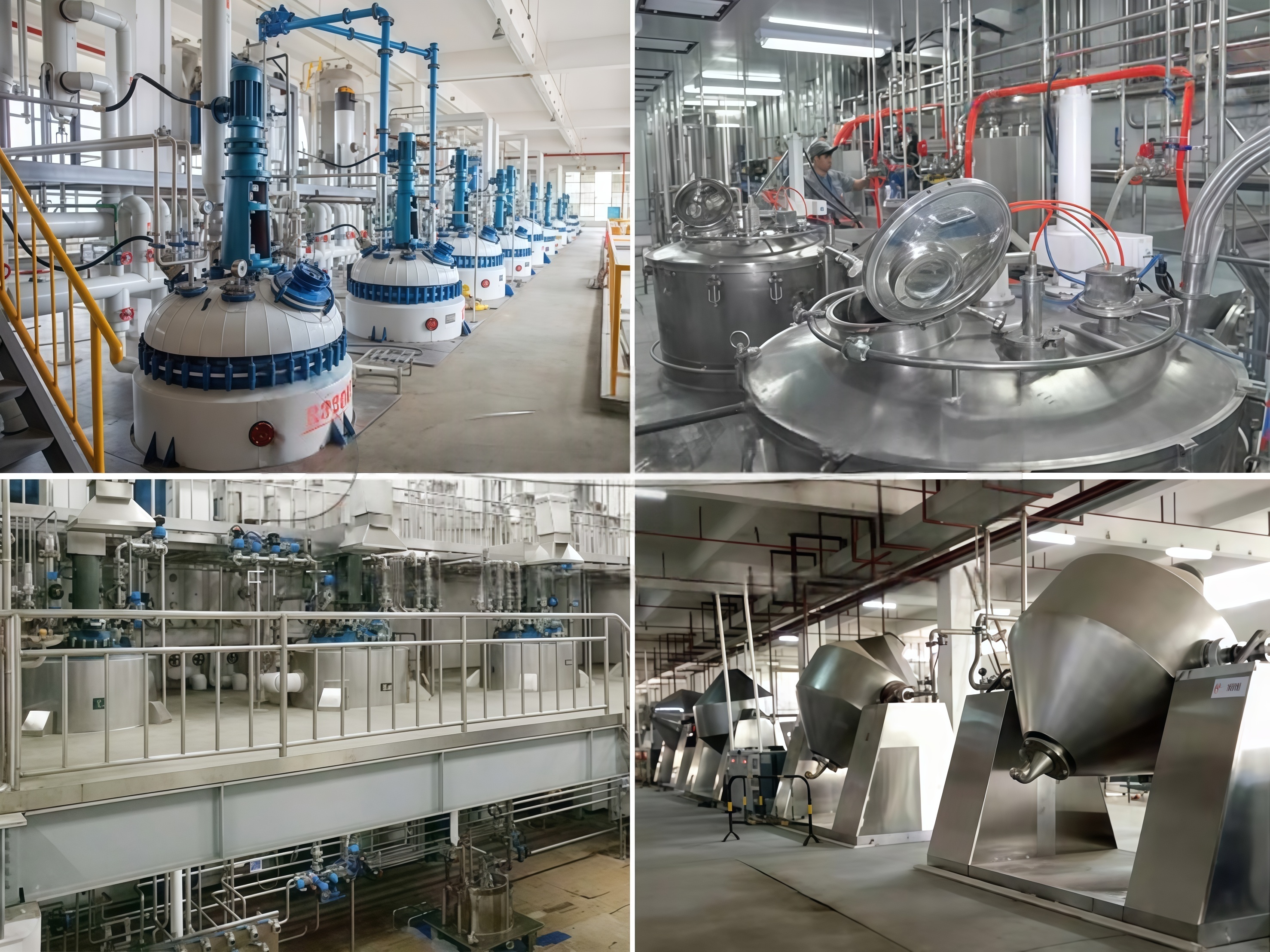
The existing purification process of special engineering plastics has the following shortcomings:
(1) High safety risksCentrifugal filtration is used, and the solvent-containing polymer slurry processed by the centrifuge is flammable and explosive, which is prone to combustion and explosion accidents. In addition, due to its extremely high rotational speed, accidental contact with the materials in the rotating centrifuge drum due to improper operation or violation of operating regulations will result in accidents such as finger or arm amputation. Furthermore, drum rupture, drum displacement, manhole cover flying out, etc., caused by various reasons, can also lead to serious casualties.
(2) Inability to achieve closed production and significant environmental pollutionMaterial transfer operations are required between each step of centrifugal filtration, washing, crushing, purification, and drying. The level of automation is low, requiring a large number of operators per shift. During material transfer, there are occupational disease risks such as exposure to solvents and dust, quality control difficulties including foreign matter control, and high management complexity. It also has serious defects such as poor filter cake washing effect, high labor intensity of manual operations, difficult material transfer, and easy contamination of materials by equipment transmission components and open working environments.
(3) Cumbersome purification process and poor stabilityIn the traditional purification process of special engineering plastics, the use of dehydrating agents and the large amount of salt in the polymerization system lead to environmental unfriendliness and difficult elution. A large amount of organic solvents and deionized water are required for repeated washing to achieve a good purification effect. Therefore, the process is complex, the quality stability is poor, and the production cost is high.
(4) Multiple equipment, cumbersome operations, and inability to meet the requirements of large-scale industrial production processesFiltration, washing, and drying are all processed using independent equipment such as centrifuges, washing tanks, and dryers. Due to the scattered equipment, the production process is not easy to control, and the degree of automation is low. Improper control or manual operation in sampling, testing, feeding, supplementary feeding, temperature, pressure, etc., often leads to errors and contamination. The transportation of materials between the three devices of reaction, filtration, and drying is more difficult. Sometimes, this can cause the entire set of devices to be unable to operate completely normally, or result in high labor intensity, long production cycles, high energy consumption, and low efficiency, which affect product quality and fail to meet the requirements of large-scale fine chemical production processes.
(5) Large floor space and high equipment investmentUnit operations such as filtration, multiple washing and filtration, and drying are usually carried out independently by unit equipment such as crystallization tanks, filter presses or centrifugal filters, washing tanks, and dryers. A variety of unit equipment form a long-process large-scale device, and materials are transported between equipment through pipelines or other methods. Each unit operation corresponds to the corresponding unit equipment, and the scattered arrangement of equipment greatly increases the plant area of the entire production process and significantly raises the equipment investment.
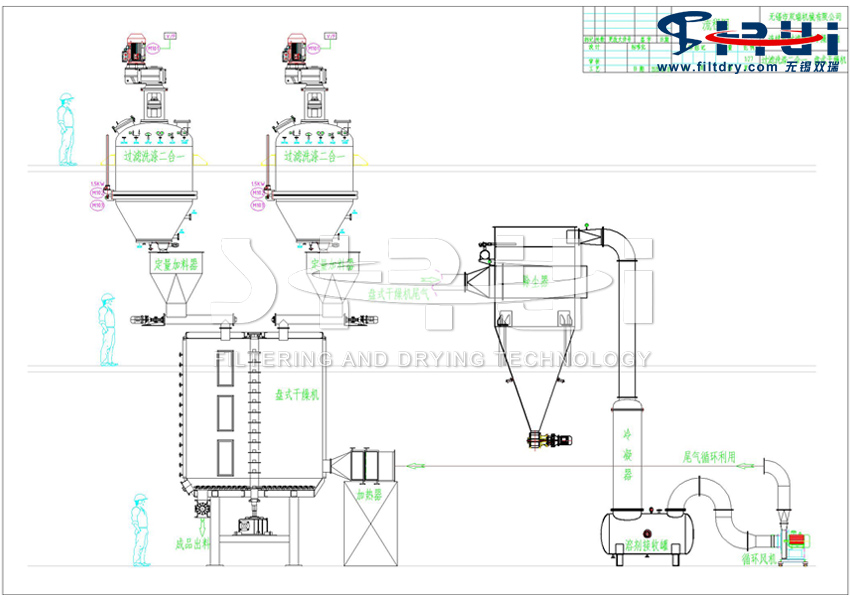
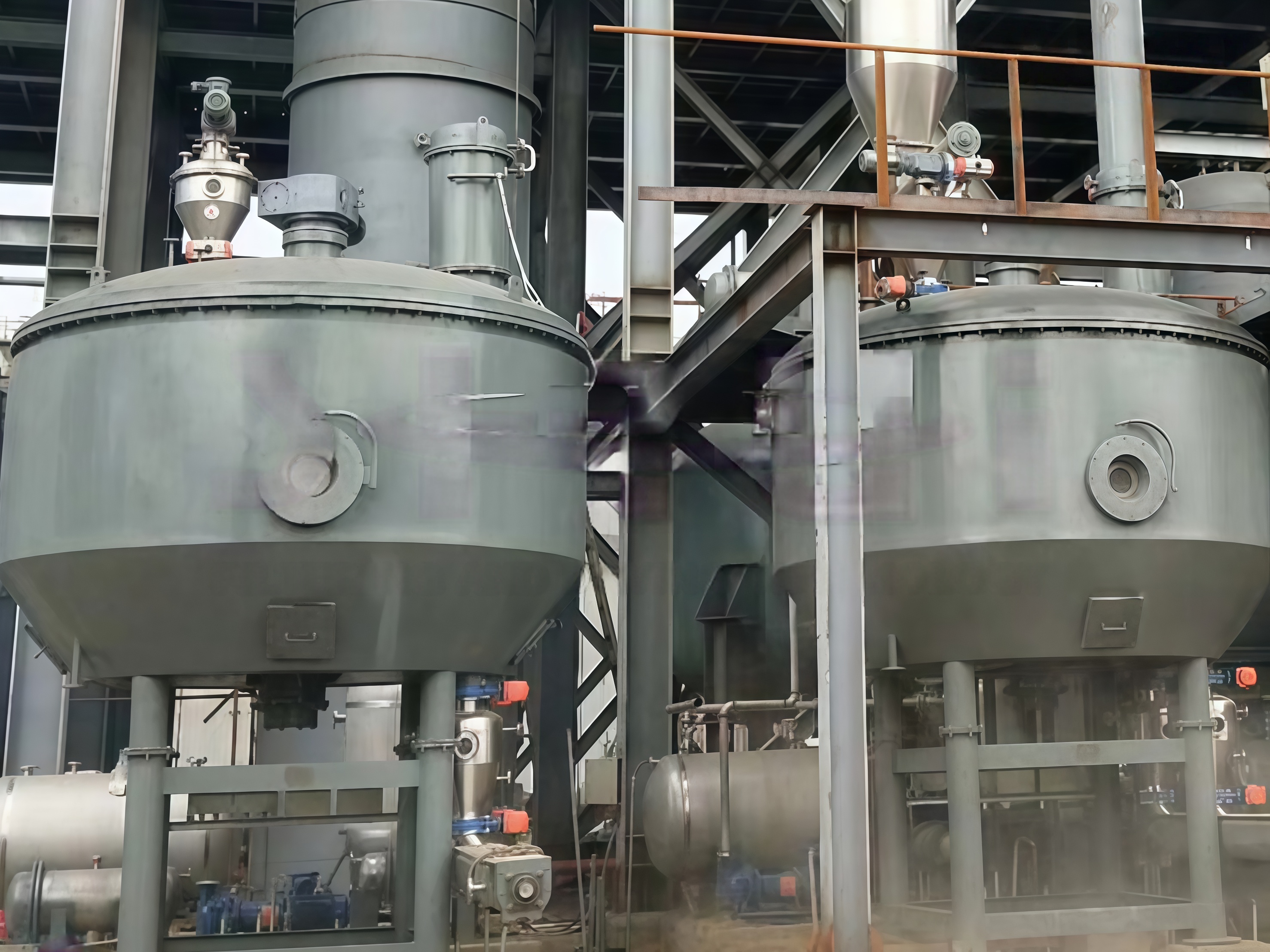
At present, the new materials industry is in urgent need of continuous refining and purification equipment for special engineering plastics to improve the above-mentioned problems. The filter-wash-dryer unit developed by Wuxi Shuangrui (Patent No.: ZL 202121331911.4) solves the problems of cumbersome steps and low efficiency in the traditional refining and purification of special engineering plastics, thereby improving the overall efficiency of the material filtration, washing and drying unit, ensuring production continuity with high efficiency, low energy consumption, environmental friendliness, universality and easy promotion.
Working Principle of the Special Filter-Wash-Dryer Unit for Continuous Refining and Purification of Special Engineering PlasticsThe filter-wash-dryer unit for continuous refining and purification of special plastics is characterized by comprising: a filtration and washing system, a drying system and a tail gas circulation system. The filtration and washing system is connected to the drying system, and the drying system is connected to the tail gas circulation system through pipelines. The filtration and washing system includes at least two sets of integrated filtration and washing equipment.
The drying system includes a disk dryer, which comprises a hollow cylindrical barrel. An air inlet is opened on the right side below the barrel. The tail gas circulation system includes a dust collector, a condenser, a solvent recovery tank and a circulating fan. An air outlet is also arranged above the barrel, and the air outlet of the circulating fan is connected to the air inlet through a pipeline. This novel technology relates to the field of material filtration, washing and drying, and specifically to a filter-wash-dryer unit for continuous refining and purification of special plastics.
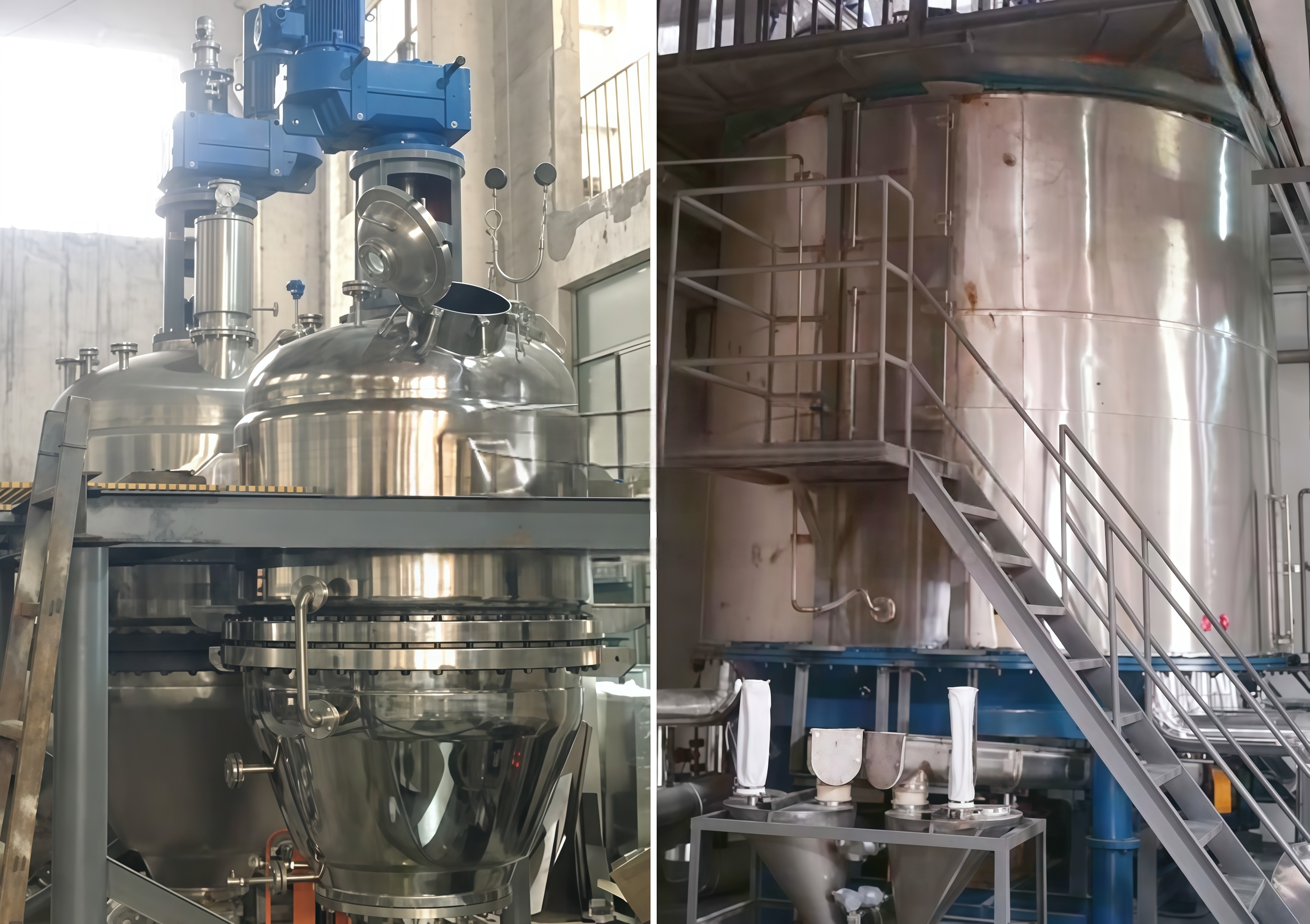
Technical Advantages of the Special Filter-Wash-Dryer Unit for Continuous Refining and Purification of Special Engineering Plastics
The continuous filter-wash-dryer unit enables continuous and closed operation of the entire filtration, washing, and drying processes within the same system, with automatic discharge. Compared with traditional processes, it has the following advantages:
(1) Fully closed production system processThe entire production process from the solid-liquid separation of polymer slurry to the end of drying is fully closed. This set of equipment operates as a fully enclosed system, and the production process is more in line with the requirements and specifications of large-scale fine chemical production. It eliminates dust volatilization factors, controls foreign matter contamination, and reduces safety and environmental risks.
(2) Guaranteed safetyIn the solvent purification process for oligomer removal, integrated filtration and washing equipment is used instead of centrifugal filtration and washing tanks, eliminating the safety risks of centrifuges. The integrated filtration and washing equipment can be protected by nitrogen filling during filtration, resulting in extremely low safety risks. Due to the fully closed operation of the production system, it can completely avoid the pollution of the operating environment air by solvents during production, and at the same time reduce the occurrence of poisoning accidents of operators caused by contact with toxic substances. This advantage is even more important today when calls for safety and occupational health are increasing.
(3) More environmentally friendlySince the entire production system operates in a fully closed manner, almost 100% of materials and solvents can be recovered, avoiding waste caused by material leakage, residue, and solvent volatilization, which brings significant economic benefits, especially when processing high-value materials and using high-value solvents.
(4) Simple operation and high degree of automation: Each process is carried out in stages with complete safety measures. Operators can complete the operation after simple training, and the labor intensity is greatly reduced.
(5) Improved product quality: During the washing operation, the equipment can re-stir and suspend the filter cake, enabling very thorough cleaning of impurities in the filter cake, which is conducive to improving product quality.
(6) Clean productionThis filter-wash-dryer can operate in a closed manner and is equipped with a dust collector that fully collects the dust generated after drying, meeting the requirements of high-cleanliness production operations. Online cleaning can be easily realized, which reduces solvent volatilization and safety risks during cleaning compared with traditional equipment.
Technical Improvements of the Special Filter-Wash-Dryer Unit for Continuous Refining and Purification of Special Engineering Plastics
(1) A heating jacket is installed on the outside of the integrated filtration and washing equipment, adopting steam heating. When the special engineering plastic slurry is put into the integrated kettle, heating starts immediately, and the operation is carried out with simultaneous heating and washing. Heating during washing helps to discharge impurities, reduces the number of washing times and water washing time, and improves washing efficiency.
(2) The washing liquid outlet of the integrated filtration and washing equipment is set at the bottom of the cone. When the washing liquid level drops to the bottom of the kettle, open the pressure relief valve to completely pump out the washing liquid in the kettle, accelerating washing efficiency and improving product quality.
(3) The conical filter of the integrated filtration and washing equipment adopts a segmented design. Through valve control, multi-stage independent filtration and segmented backwashing can be realized. The filtered washing liquid is collected into the main pipe and discharged, and flows into the buffer tank after pretreatment by a dual-bag filter.
(4) The high-pressure pump at the bottom of the buffer tank transports the washing liquid to the precision filter for secondary treatment, and then realizes two-way output through valve control; one way goes to the washing liquid inlet at the top of the integrated equipment for preliminary washing and purification of materials (reuse); the other way is connected to the washing liquid treatment pipeline and enters the waste liquid disposal process, which can achieve energy and water saving effects, reduce production costs, and improve benefits.
(5) The integrated filtration and washing equipment is ideal for repeated washing of materials. After the materials are pressed dry in the machine, washing liquid can be added through the washing liquid inlet at the top, and then the filter cake is uniformly reslurried through the stirring of the hollow shaft and hollow ribbon. After uniform reslurrying and stirring, the materials are pressed dry again. If one washing is not sufficient, multiple washings can be performed by repeating the above steps, which is easy to operate with extremely low labor intensity.
(6) The integrated filtration and washing equipment has a simple structure, novel design, and convenient use. Through the configuration of centrifugal pumps and transmission pipes, cyclic washing of special engineering plastic liquid materials can be realized. The liquid level gauge not only can control the amount of washing liquid added during feeding to prevent insufficient capacity from failing to achieve the washing effect, but also can monitor the interface between the special engineering plastic liquid material and the impurity solution after washing, avoiding the mixed output of impurities and the monitored PVB liquid material.
(7) The continuous filter-wash-dryer meets the process requirements of large-scale industrial production of polymer materials. It is equipped with multiple integrated filtration and washing equipment for alternating batch refining and purification of special engineering plastics, with full-process automatic control and closed operation, enabling continuous work.
(8) The closed-circuit circulation disk dryer is installed vertically with complete thermal insulation, resulting in high utilization rates of heat sources and waste heat. It only requires 1.1-1.4 kg of steam to evaporate 1 kg of water, with energy consumption accounting for about 30% of that of hot air dryers and power demand accounting for about 10% of that of hot air dryers, which is economically feasible.
(9) The temperature of each layer of material trays in the closed-circuit circulation disk dryer is controllable, achieving the specified temperature distribution. It combines drying and cooling, has strong drying capacity, and is more suitable for moisture-absorbing materials sensitive to humidity.
(10) The hot and humid gas containing a small amount of oligomers from the closed-circuit circulation disk dryer enters the condenser, where the solvent and water vapor in the gas are condensed (solvent recovery rate is over 95%). This not only recovers the solvent but also condenses and dehumidifies the drying gas for recycling. The recovered solvent can be reused, saving costs and avoiding environmental pollution caused by exhaust gas emission.
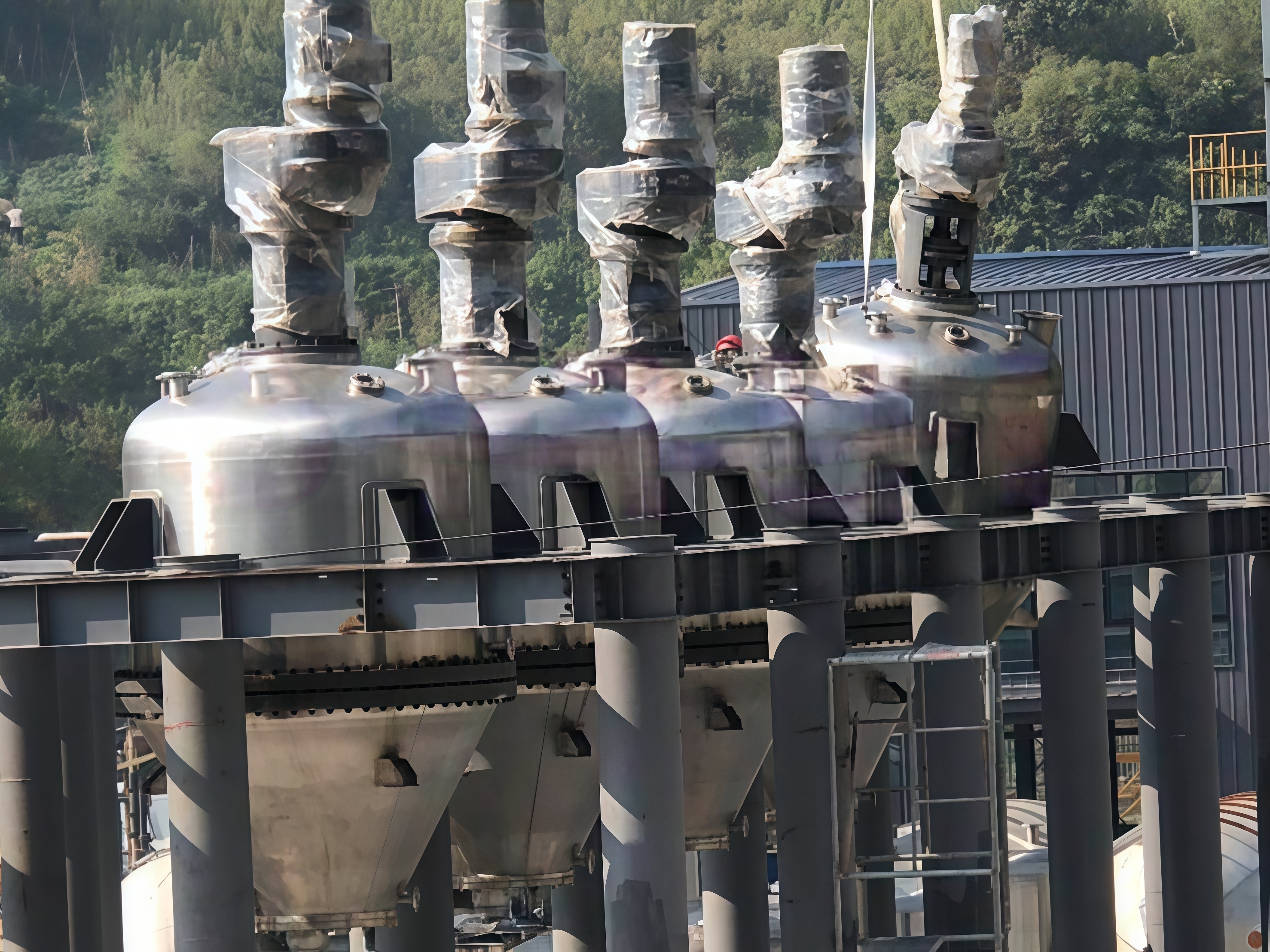
Wuxi Shuangrui is committed to advancing technological innovation in closed-loop circulation dryers and multi-functional filter-wash-dryers, and cherishes the full trust bestowed by customers. Intellectual property rights (IPR) are the common lifeline of Shuangrui Machinery and its customers. At Wuxi Shuangrui, we adhere to the founding principle of integrity and dedication, maintain zero tolerance for infringement, and severely crack down on any criminal acts of IPR infringement. This is Wuxi Shuangrui's paramount responsibility, obligation, and commitment. We must sincerely repay customers' trust and completely eradicate any form of infringement.


 备案号:备案号:苏ICP123456789


