In the post-treatment processes of active pharmaceutical ingredients (APIs), pesticides, dyes and other fine chemical production, equipment such as crystallizers, filters and dryers are generally required for completion. These devices operate independently, each with its own supporting equipment, resulting in a large floor space and high cost. The handling or transportation of materials between units is cumbersome, which not only leads to high labor intensity but also easily causes material loss and waste. Additionally, the long production cycle, high energy consumption and low efficiency affect product quality.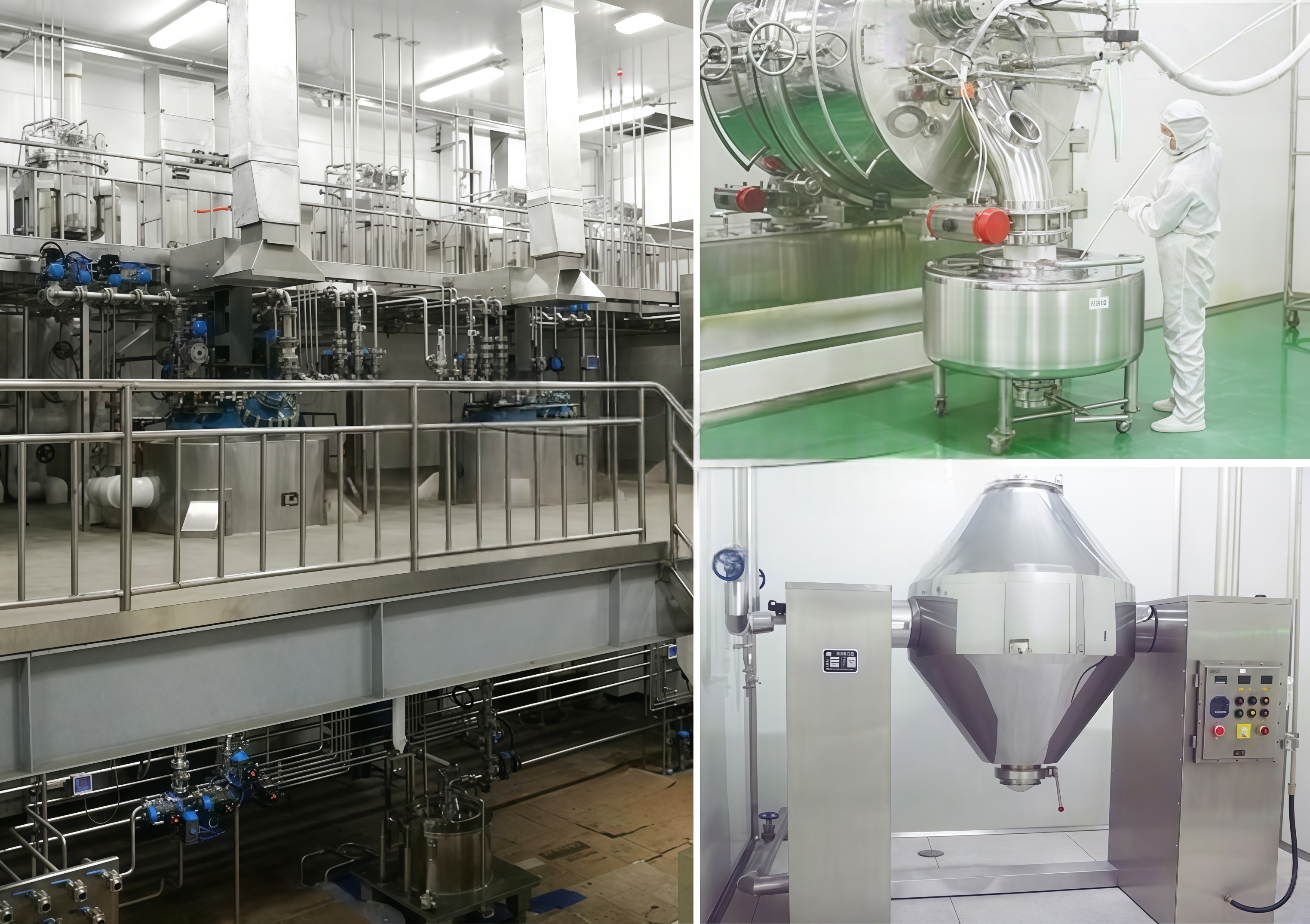
The Filter-Wash-Dry Integrated Machine concentrates multiple unit operations in the post-treatment process of fine chemical production into a single piece of equipment. This equipment can sequentially complete the entire process of filtration, washing, drying, and solid discharge in a closed environment, avoiding product transportation loss and pollution during process conversion. With a fully closed and automatic design, it is easy to operate and highly suitable for the production of fine chemicals, pharmaceuticals and their intermediates, flammable, explosive, highly toxic and other special chemicals. Existing Filter-Wash-Dry Integrated Machines have the following advantages and disadvantages:
(1) The Filter-Wash-Dry Integrated Machine can complete multiple operations such as reaction, extraction, filtration, repeated filtration and washing, and drying in one machine, directly yielding finished products. It has unique advantages in processes requiring closed operation, such as flammable, explosive, toxic or highly toxic materials, as well as biological products, pharmaceuticals, food and other products that do not allow contamination.
(2) Safety and environmental protection: The Filter-Wash-Dry Integrated Machine operates in a fully closed manner, which can completely avoid the pollution of the operating environment air by solvents during production, and at the same time reduce the occurrence of poisoning accidents of operators caused by contact with toxic substances. Today, with the increasing calls for environmental protection and labor protection, this advantage is even more important.
(3) High-speed washing: During the washing operation, the Filter-Wash-Dry Integrated Machine can re-stir and suspend the filter cake, enabling extremely thorough washing of the filter cake.
(4) Unsatisfactory heat transfer effect: The materials do not fully contact the heat transfer jacket, resulting in an unsatisfactory drying effect. If the materials are slightly thermosensitive or thixotropic, the effect will be greatly reduced.
(5) Low drying efficiency: When drying some thermosensitive and thixotropic crystalline materials, agglomeration may occur, leading to disadvantages such as long drying time, low volumetric production utilization rate, and difficulty in large-scale production. These shortcomings greatly limit its application.
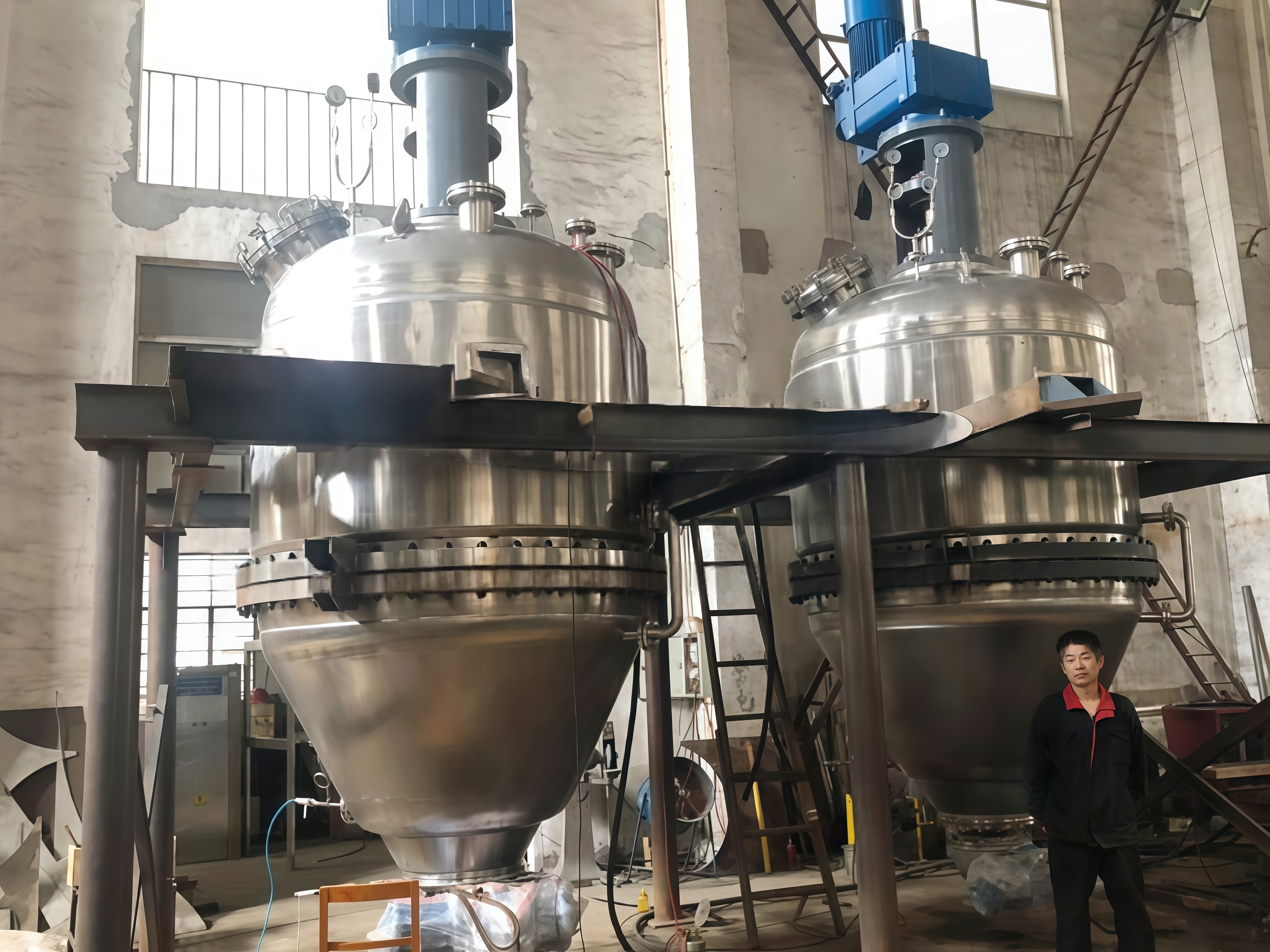
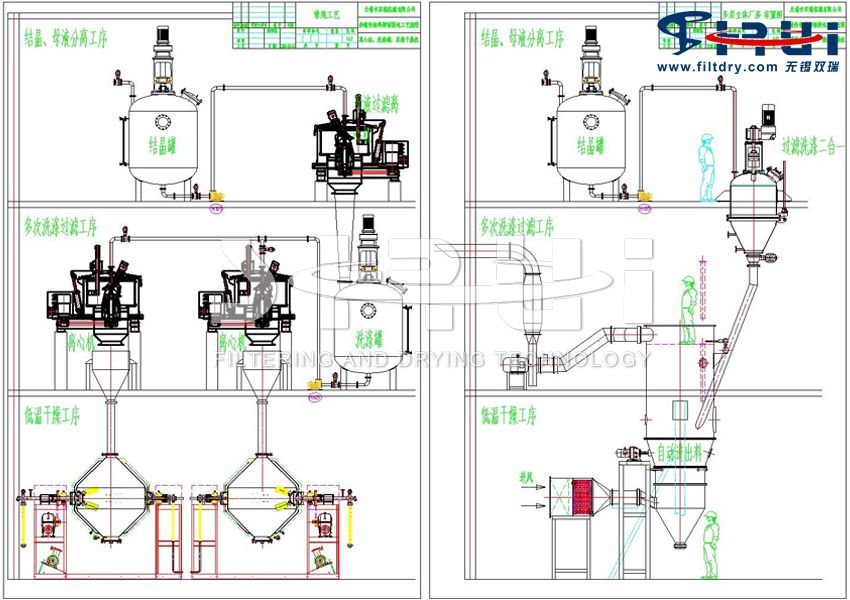
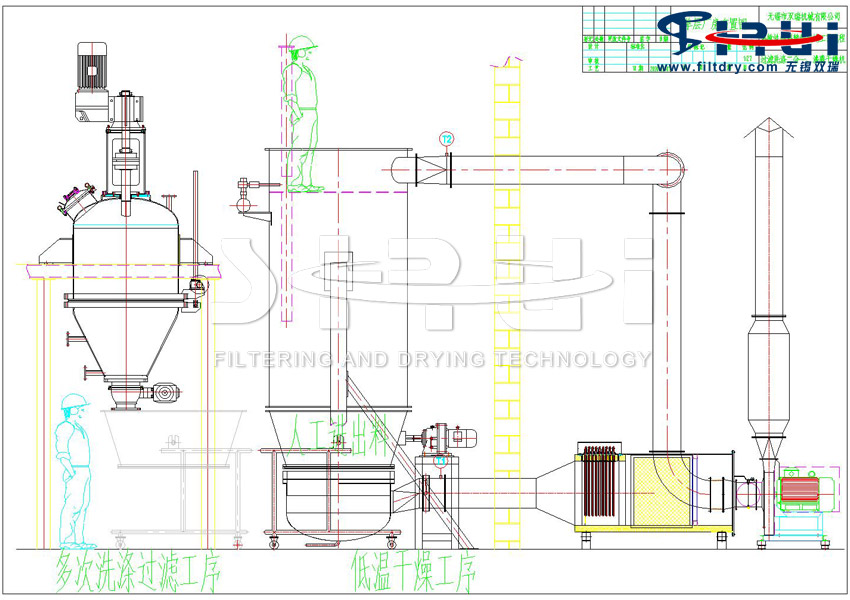
To address the issues of unsatisfactory heat transfer effect and low drying efficiency when the filter-wash-dry integrated machine dries some thermosensitive and thixotropic crystalline materials, Wuxi Shuangrui has developed the Thermosensitive Material Refining, Purification, Filtration, Washing and Drying Unit (Patent No.: ZL 202120867061.3). Its characteristics are as follows: it includes a crystallization tank, a conical filter-wash dual-purpose machine, and a fluidized bed dryer. The crystallization tank is connected to the conical filter-wash dual-purpose machine via pipelines, and a chemical pump is installed on the pipeline between the crystallization tank and the conical filter-wash dual-purpose machine. The fluidized bed dryer is located below the conical filter-wash dual-purpose machine and connected to it through pipelines. The fluidized bed dryer comprises a straight-section dust removal box and a silo. A pulse bag dust cleaning device is arranged above the inside of the straight-section dust removal box, and a main machine air outlet is provided above the pulse bag dust cleaning device. The main machine air outlet is connected to an induced draft fan via a pipeline, and the induced draft fan is connected to an external tail gas treatment device through a pipeline. A wet material inlet is arranged above the bottom of the straight-section dust removal box, and the wet material inlet is connected to the wet material outlet below the conical filter-wash dual-purpose machine via a pipeline. The silo is installed at the bottom of the straight-section dust removal box, and the silo includes a mixing bin and an air distribution chamber. A hot air distribution plate is arranged between the mixing bin and the air distribution chamber. A stirring mechanism is installed in the middle of the mixing bin and located above the hot air distribution plate. An air inlet is provided on the side of the air distribution chamber, and the air inlet is connected to a hot air heating box via a pipeline. A discharge port is arranged at the lower cylinder of the air distribution chamber.
PID Diagram of Thermosensitive Material Refining, Purification, Filtration, Washing and Drying Unit
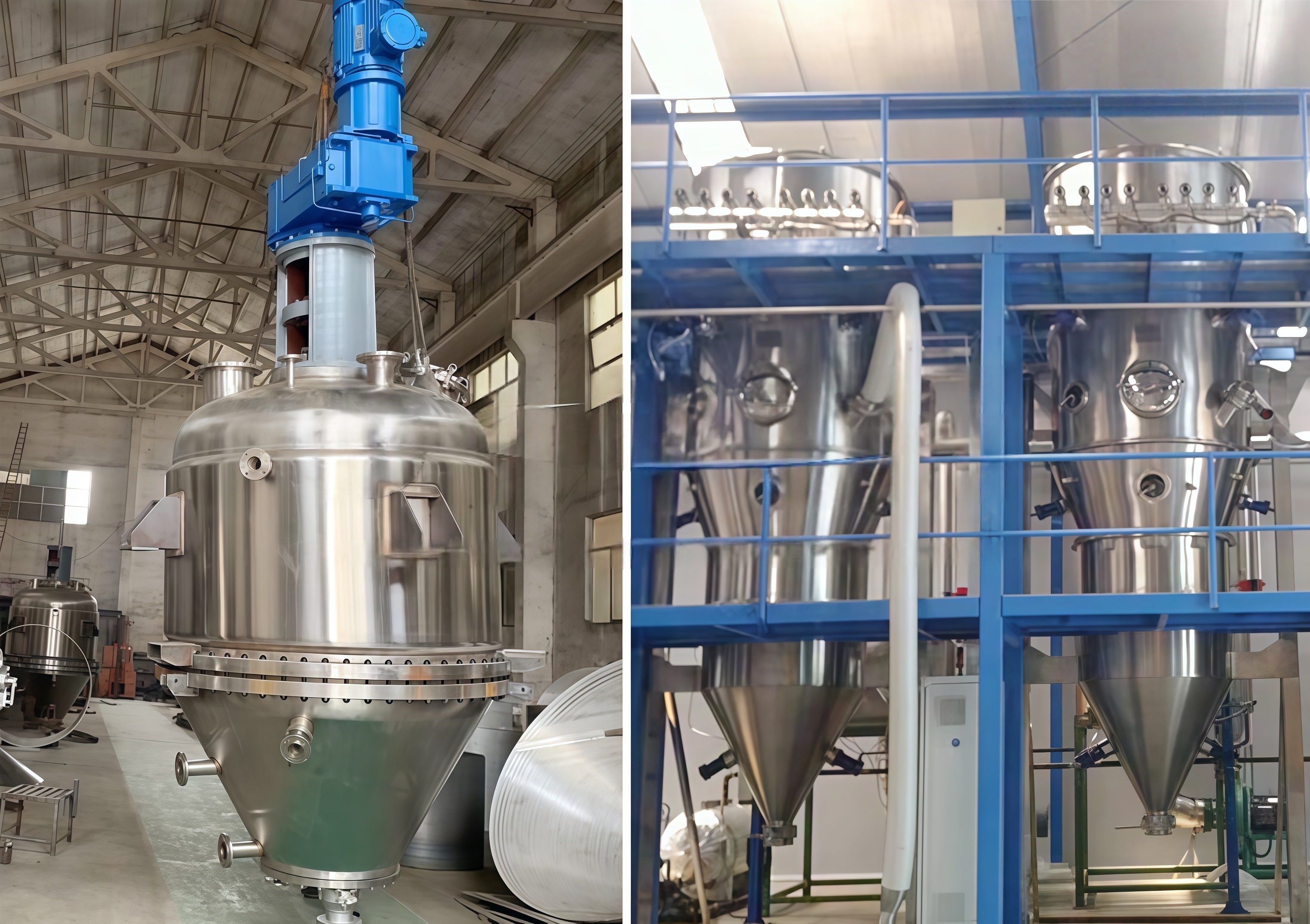
Technical Features of Thermosensitive Material Refining, Purification, Filtration, Washing and Drying Unit(1) It can conveniently perform repeated filtration and washing of materials, enabling the functions of multiple unit devices to be completed on this single machine, thereby significantly reducing equipment costs, floor space, labor intensity, energy consumption, etc. Meanwhile, the conical filter-wash dual-purpose machine is particularly suitable for materials requiring high washing standards, repeated slurry washing and filtration, and can save washing liquid.(2) Through the stirring mechanism, it can assist in fluidization, prevent channeling and dead bed phenomena of materials during drying, maintain a stable fluidization state, and ensure uniform moisture content of materials after drying.(3) Adding a straight-section dust removal box to the fluidized bed dryer, increasing the height of the straight section, enhances the fluidization effect during material drying and improves the intensity of heat and mass transfer. It also improves the gravity sedimentation separation effect of powdery materials and reduces the dust removal resistance of the dust collector.(4) The dust cleaning method is pulse bag dust cleaning, with continuous offline dust cleaning during operation. The dust cleaning effect is far better than online pulse dust cleaning and cylinder bag shaking dust cleaning methods, avoiding material dead bed during drying.(5) Equipped with top-suction type hard skeleton cloth bags, which ensures the cloth bag area and dust cleaning effect while reducing the poor working environment for workers when disassembling and cleaning the cloth bags. The cloth bags can be easily removed from the equipment without workers having to climb into the cylinder.(6) The pulse bag dust collector is equipped with a differential pressure gauge to monitor the operation status of the dust collector in real time, so as to adjust the air volume and pressure of the fan in a timely manner and ensure the normal operation of the high-efficiency fluidized bed dryer.(7) The equipment optimizes the drying process flow, adopting pre-drying, strong drying and cooling procedures. The pre-drying section adopts a design of large air volume and high air pressure, so that viscous wet particles can be quickly dispersed and surface pre-dried; the drying section uses low air volume and high temperature air for constant-speed drying. In this way, materials can have appropriate drying temperature and air volume in different states, so as to achieve the ideal drying effect.
Application Case of Thermosensitive Material Refining, Purification, Filtration, Washing and Drying UnitMethyl octabromide ether is a flame retardant developed in recent years for expanded polystyrene flame retardancy. Due to its environmental protection characteristics, it is an excellent substitute for hexabromocyclododecane, which is listed in the Stockholm Convention's prohibited list. The industrial product of octabromide ether is a white or light yellow solid powder with a melting point range of 85-105℃. It belongs to halogenated flame retardants with a bromine content of 68% and is a general additive flame retardant, mainly used for flame retardant modification of polyolefin polymer materials such as polypropylene (PP) and polyethylene (PE). The production of methyl octabromide ether is divided into two steps - etherification and bromination; etherification is the reaction of tetrabromobisphenol A, sodium hydroxide and methyl chloropropene in a solvent, and the intermediate etherate is obtained through filtration, washing and drying. Bromination is obtained by the addition reaction of etherate dissolved in solvent with bromine.The original technology was that after the etherification reaction was completed, centrifugal filtration was carried out by a centrifuge, then rinsed with solvent, then dried by an air flow dryer or a double cone vacuum dryer, and the intermediate product was put into a reaction kettle to be dissolved with solvent. This process was divided into four procedures: centrifugation, washing, drying and dissolution, with complex processes and many workers. During centrifugation, the solvent would be discharged in an unorganized manner, affecting environmental pollution; during material washing, due to the poor washing effect of materials in the centrifuge and the inability to dry, the materials would carry part of the solvent, and this part of the solvent would enter the wastewater and cannot be recovered after the materials are dissolved, increasing production costs.
Later, the filter-wash-dry three-in-one machine was used. The post-treatment process of methyl octabromide ether did not require frequent transfer of materials, reducing the number of equipment used and the labor intensity of employees. However, because the industrial product of octabromide ether is a white or light yellow solid powder with a melting point range of 85-105℃, during the vacuum drying stage of the three-in-one machine, the materials had problems such as softening and agglomeration, resulting in yellowing and denaturation of the finished methyl octabromide ether, which seriously affected the product quality. Moreover, the drying process took too long, greatly reducing the working efficiency of the filter-wash-dry three-in-one machine.Now, the thermosensitive material refining, purification, filtration, washing and drying unit with a 5000L filter-wash dual-purpose machine in series with a 1500L automatic feeding and discharging fluidized bed dryer can match the production capacity of multiple 6300L methyl octabromide ether etherification reaction kettles. Multiple processes such as mother liquor separation, washing, filtration, multiple washing and purification, and low-temperature drying are completed with full automatic control. The processing time of the entire process is reduced from the original 8-12 hours to 3-4 hours now, and the finished methyl octabromide ether has no quality problems such as agglomeration and yellowing. The thermosensitive material refining, purification, filtration, washing and drying unit can realize the recovery of solvents during the process, which not only reduces environmental pollution but also saves the use of solvents and reduces costs.
Wuxi Shuangrui is committed to promoting technological innovation in closed-circuit circulation dryers and multi-functional filter-wash-dry machines, and cherishes the full trust granted by customers. Intellectual property is the common lifeline of Shuangrui Machinery and its customers. At Wuxi Shuangrui, we adhere to the founding principle of honesty and dedication, maintain zero tolerance for infringement, and severely crack down on any criminal acts of intellectual property infringement. This is Wuxi Shuangrui's supreme responsibility, obligation and commitment. We must sincerely repay customers' trust and completely eliminate any acts of infringement.


 备案号:备案号:苏ICP123456789


