In the production process of active pharmaceutical ingredients (APIs), the common production process is: reaction → crystallization → filtration → washing → filtration → drying. In the old process production equipment, each unit operation has corresponding unit equipment, which is highly scattered. Manual operation is often required, resulting in high labor intensity. During material transfer, the exposure time is long and manual pollution is serious. Most of these equipment have single functions, high labor intensity, and considerable material loss during operation. More importantly, these equipment are generally operated in an open manner, which is likely to pollute the environment and endanger the health of operators.
To address these issues, the new cylindrical-conical reaction-filtration-drying three-in-one multi-functional equipment integrates filtration, washing and drying. It can meet the transformation of the chemical industry towards high quality, high added value, multiple varieties and small batches, and also has multiple functions such as reaction, extraction, crystallization, concentration, evaporation, mixing and crushing, with convenient operation. ① The multi-functional filtration and drying equipment can realize fully closed automatic operation, meet high cleanliness operation and GMP requirements, and is especially suitable for liquid-solid separation of toxic and easily polluted materials, ensuring safety and environmental protection; ② Solvents can be fully recovered, and a dust collection device is equipped; ③ Pressurization and vacuum pumping can be carried out as needed; ④ Automatic feeding and discharging save manpower.
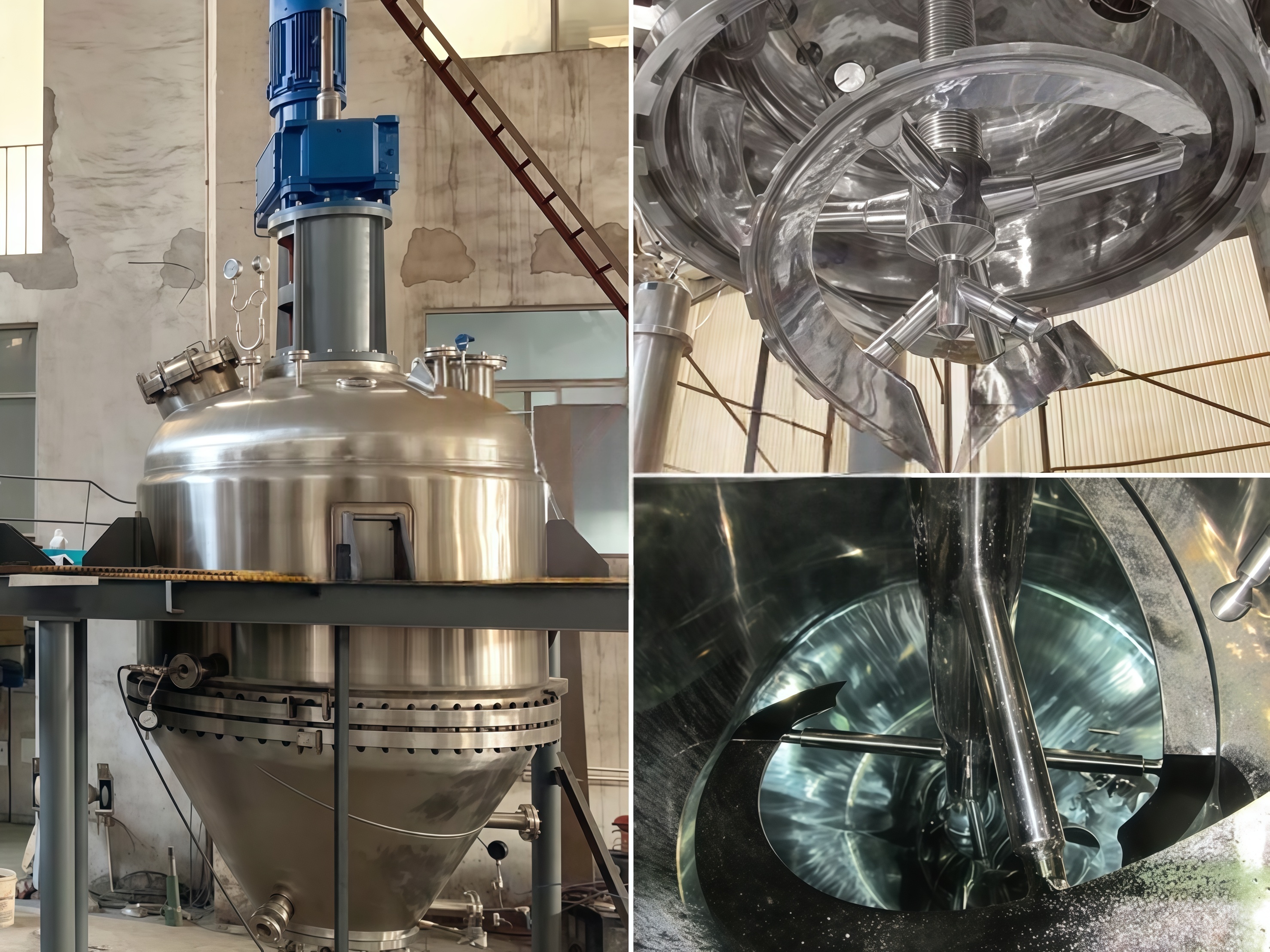
During the long-term production and use of existing filter-wash-dry three-in-one machines, some defects have been found, such as unsatisfactory drying effect, little material turning during drying, low heat transfer efficiency, and limited drying effect.
(1) Unsatisfactory heat transfer effect: The filter-wash-dry three-in-one machine is equipped with a filtration device in the conical part. Although this part is still heated by an external jacket, the heat transfer effect is relatively low, leading to unsatisfactory drying. If the material is slightly thermosensitive or thixotropic, the effect will be greatly reduced.
(2) Low drying efficiency and agglomeration of finished products: When drying some thermosensitive and thixotropic crystalline materials, agglomeration may occur. This results in shortcomings such as long drying time, low volumetric production utilization rate, and difficulty in large-scale production, greatly limiting its application.
(3) Low loading coefficient and poor drying effect during drying: The filter-wash-dry three-in-one machine is designed according to the total volume of materials plus washing liquid during refining and purification. After the washing liquid is filtered, the material volume is about 20% to 30% of the total volume of the three-in-one machine. During drying, the low loading coefficient means the material can only contact part of the heat transfer surface, leading to low heat transfer efficiency and limited drying effect.
(4) Long time required for vacuum drying process (2-3 times that of refining, purification, filtration and washing processes) and low equipment utilization rate: Due to unsatisfactory heat transfer effect, low drying efficiency, low loading coefficient during drying and other reasons, the time required for the vacuum drying process accounts for more than 60% of the total time of the filter-wash-dry process, preventing the full exertion of the equipment's production capacity.
(5) Easy clogging of the conical filter: After the washing liquid is filtered, a small amount of washing liquid remains in the gaps of the multi-layer metal sintered mesh and the jacket between the inner wall of the main machine and the sintered mesh. During the drying process, fine crystal powder in the residual washing liquid precipitates and recrystallizes, gradually clogging the conical filter.
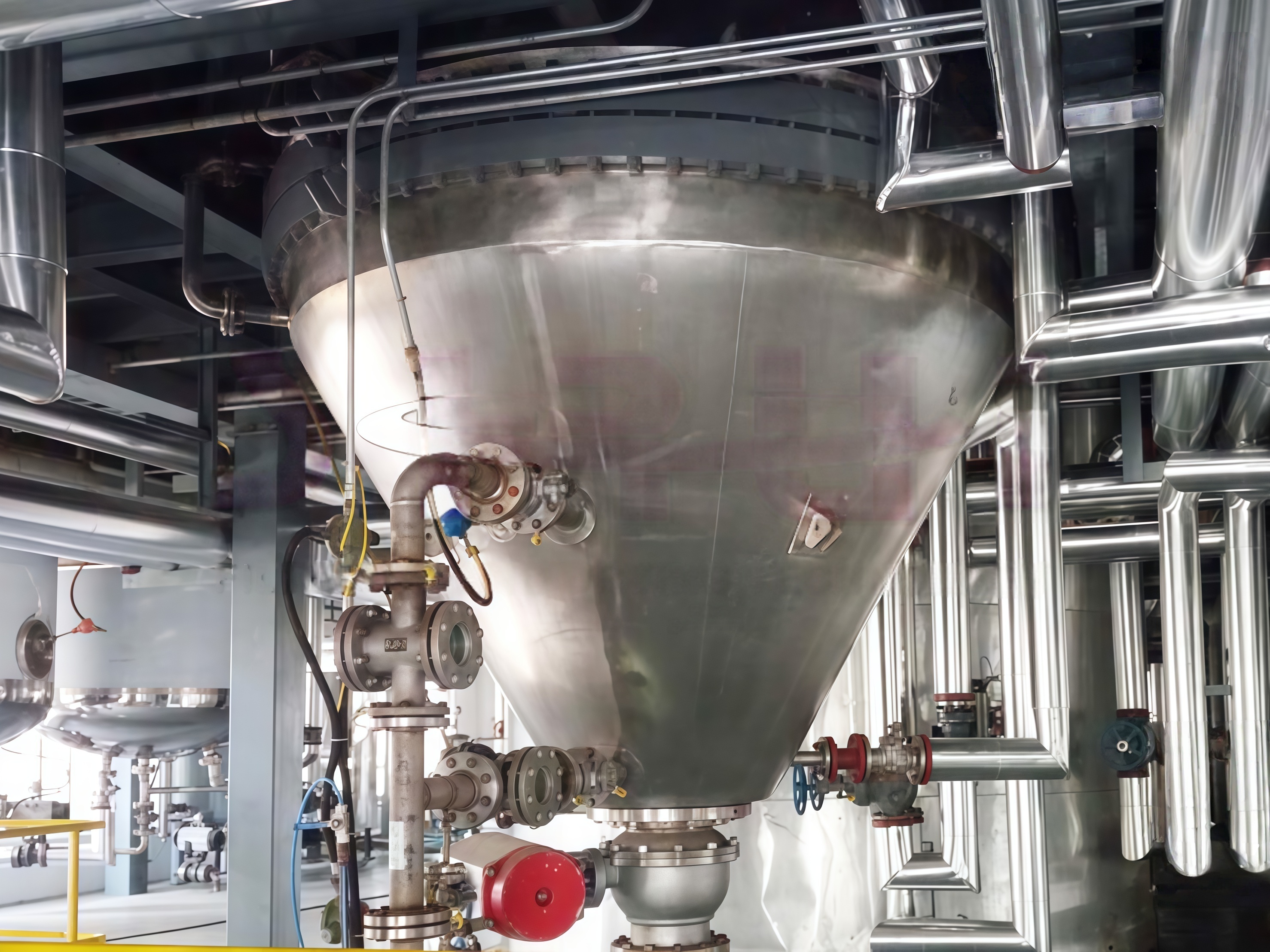
To solve the above technical problems, Wuxi Shuangrui has developed the High-efficiency Filtration, Washing and Drying Unit (Patent No.: ZL 202120867115.6). The purpose of this utility model is to prevent agglomeration during drying, thereby improving the efficiency of material filtration, washing and drying. Its characteristics are as follows: it includes a crystallization tank, which is sequentially connected to a conical filter-wash dual-purpose equipment and a vacuum drying system via pipelines. The conical filter-wash dual-purpose equipment comprises a filtration and washing tank body. A feed liquid inlet and a washing liquid inlet are arranged above the filtration and washing tank body. The feed liquid inlet is connected to the material outlet of the crystallization tank via a pipeline. Two groups of washing liquid outlets are arranged on the right side below the filtration and washing tank body. The washing liquid outlets are sequentially connected to a dual-bag filter, a washing liquid temporary storage tank, a washing liquid high-pressure pump and a precision filter via pipelines. The precision filter is respectively connected to a washing liquid recovery tank and the washing liquid inlet of the filtration and washing tank body through a two-way pipeline. A wet material outlet is arranged below the filtration and washing tank body. The vacuum drying system includes a single-cone vacuum dryer, which is composed of an upper head and a lower cone hermetically connected by a tongue-and-groove flange from top to bottom. A wet material inlet is arranged on the left side of the upper part of the single-cone vacuum dryer, and the wet material inlet is connected to the wet material outlet on the filtration and washing tank body via a pipeline. A solvent condensation and recovery system is arranged on the right side of the upper part of the single-cone vacuum dryer. The solvent condensation and recovery system includes a pulse vacuum bag filter. The upper right end of the pulse vacuum bag filter is sequentially connected to a condenser, a buffer tank, a vacuum pump and an atmospheric condenser via pipelines, and the atmospheric condenser is connected to tail gas treatment equipment. The lower cone and upper head of the single-cone vacuum dryer are provided with interconnected heating jackets. A first connection port is arranged on the upper left side of the heating jacket, and a second connection port is arranged on the lower left side of the heating jacket. An internal heating spiral stirring device penetrates the middle of the single-cone vacuum dryer. A crushing device is arranged on the right side below the single-cone vacuum dryer, and a dry material outlet is arranged at the bottom of the single-cone vacuum dryer.
PID Diagram of High-efficiency Filtration, Washing and Drying Unit
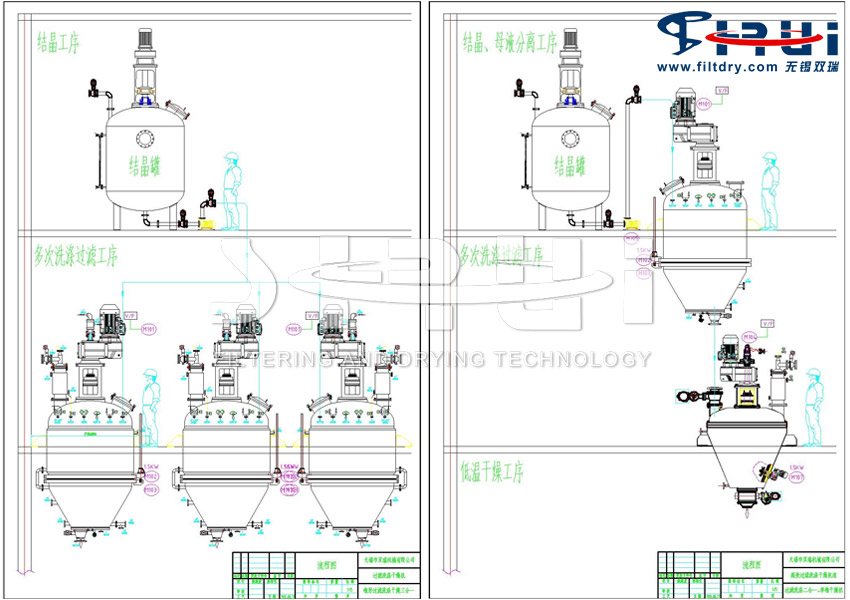
Technical Improvements of High-Efficiency Filtration, Washing and Drying Unit
(1) Give full play to the production capacity of the conical filter-wash dual-purpose machine: Rapid filtration - use the stirring ribbon to lift materials, limit the thickness of the filter cake layer, and perform pressure or vacuum filtration under the condition of a thin filter cake layer to achieve rapid solid-liquid separation. High-speed washing - the stirring bearing with a conical ribbon rotates to mix the filter cake and cleaning liquid, so that the slurry suspension filter cake is fully washed. Multiple washing and filtration are available - the machine can automatically react and mix with materials for multiple times and then wash them; after the washing and filtration meet the washing requirements, the materials are drained.
(2) The internal heating ribbon single-cone dryer is a high-efficiency, multi-functional and fully enclosed vertical vacuum drying equipment integrating vacuum distillation, crushing, powder mixing and drying. It adopts a low-shear ribbon stirring paddle to gently mix materials at low rotation speed and low energy consumption. By using the internal heat of the internal heating ribbon, the entire heating area reaches 140% of the container, which greatly improves the heating efficiency. It can not only be used for drying thermosensitive materials, but also for mixing, reacting and drying powder-powder and powder-liquid mixtures.
(3) The high-efficiency filtration, washing and drying unit adopts a conical filter-wash dual-purpose machine in series with an internal heating ribbon single-cone dryer. The total volume of the single-cone dryer is 50% of that of the dual-purpose machine. The production capacity of the unit is more than 3 times that of the three-in-one machine of the same model, which reduces the floor space, lowers the equipment cost and avoids the trouble of material handling or transportation.
(4) Add an on-line vacuum crushing device: An on-line mechanism for crushing agglomerated materials is added to ensure uniform heating of materials and shorten the drying time. The mechanism for vacuum crushing agglomerated materials is added to avoid agglomeration during drying, shorten the drying time and ensure the uniformity of materials. Frequency conversion control of crusher speed: Observe whether the materials are agglomerated during drying; start the crushing and stirring device under vacuum conditions, and the speed of the crushing and stirring device should be increased from slow to fast, which is determined by the characteristics of the materials.
Application Case of High-Efficiency Filtration, Washing and Drying Unit
Synthetic vitamins mainly refer to α-tocopherol and its ester derivatives (acetate, succinate), which have a wide range of uses. Besides being used as vitamins, they are also used as antioxidants to prevent oxidation in medicines, foods, cosmetics, feeds, and during the processing and storage of plastics.
d-α-tocopherol and succinic acid are esterified, recrystallized, filtered by centrifugation, crushed, and dried to prepare synthetic vitamins. The original process used a centrifuge for filtration and washing, and the filter cake was crushed by a swing granulator and then dried in a fluidized bed dryer. Due to the use of organic solvents in the production of synthetic vitamins, there are certain safety and occupational health risks. The traditional process equipment is batch production, with high labor intensity for employees. There is an urgent need to improve production conditions and reduce safety risks. This process has the following disadvantages:
(1) High safety risk: The use of a centrifuge for filtration poses a high risk of combustion and explosion due to the flammable and explosive nature of the material being processed. Moreover, due to its extremely high speed, if not operated carefully or in violation of regulations, contact with the material inside the rotating centrifuge drum can cause finger or arm amputation accidents. In addition, drum rupture, drum displacement, and the ejection of manhole covers due to various reasons can also cause serious personal injury accidents.
(2) Severe environmental pollution: The wet product contains 40% by mass of solvent, which volatilizes into the atmosphere after fluidized bed drying and cannot be effectively recovered, causing severe environmental pollution.
(3) Inability to produce in a closed system, not in compliance with GMP: The transfer of materials between the steps of filtration, crushing, and drying requires manual operation, with low automation levels. Each shift requires a large number of personnel, and during material transfer, there are occupational health risks such as solvent and dust exposure, as well as difficulties in quality control such as foreign matter control, making GMP management difficult.
(4) Large floor space: The old process requires the installation of a centrifuge, swing granulator, and fluidized bed dryer, resulting in a large footprint for production equipment.
The three-in-one filtration, washing and drying process is applied in the production of synthetic vitamins, successfully replacing the conventional processes of centrifugation and fluidized bed drying, achieving good economic and environmental benefits, and making the production more in line with GMP requirements. D-α-tocopherol and succinic acid are esterified and recrystallized, then enter the three-in-one equipment where filtration, washing and drying are completed in the same device to obtain the finished product after drying.
(1) Filtration Process
The crystallization liquid is added to the three-in-one equipment, and nitrogen gas is introduced to pressurize and filter. To accelerate the filtration, vacuum can be applied in the filtrate tank. If the filter cake is found to be leaking (or cracked), the stirring paddle can be reversed at a lower speed to level the surface of the filter cake.
(2) Washing Process
After filtration, solvent is added for washing to clean the residual mother liquor on the surface of the filter cake, removing impurities and improving product quality.
(3) Drying Process
After filtration, the three-in-one equipment is stirred and the vacuum system is activated to dry the solvent contained in the filter cake. To speed up the drying process, hot water can be circulated in the jacket of the three-in-one equipment for heating. A solvent recovery system is equipped during drying, and the vapor discharged after solvent drying enters the condensation and recovery device. The condensed solvent can be reused, reducing solvent loss. After drying, samples are taken for inspection. If they pass, the product is obtained.
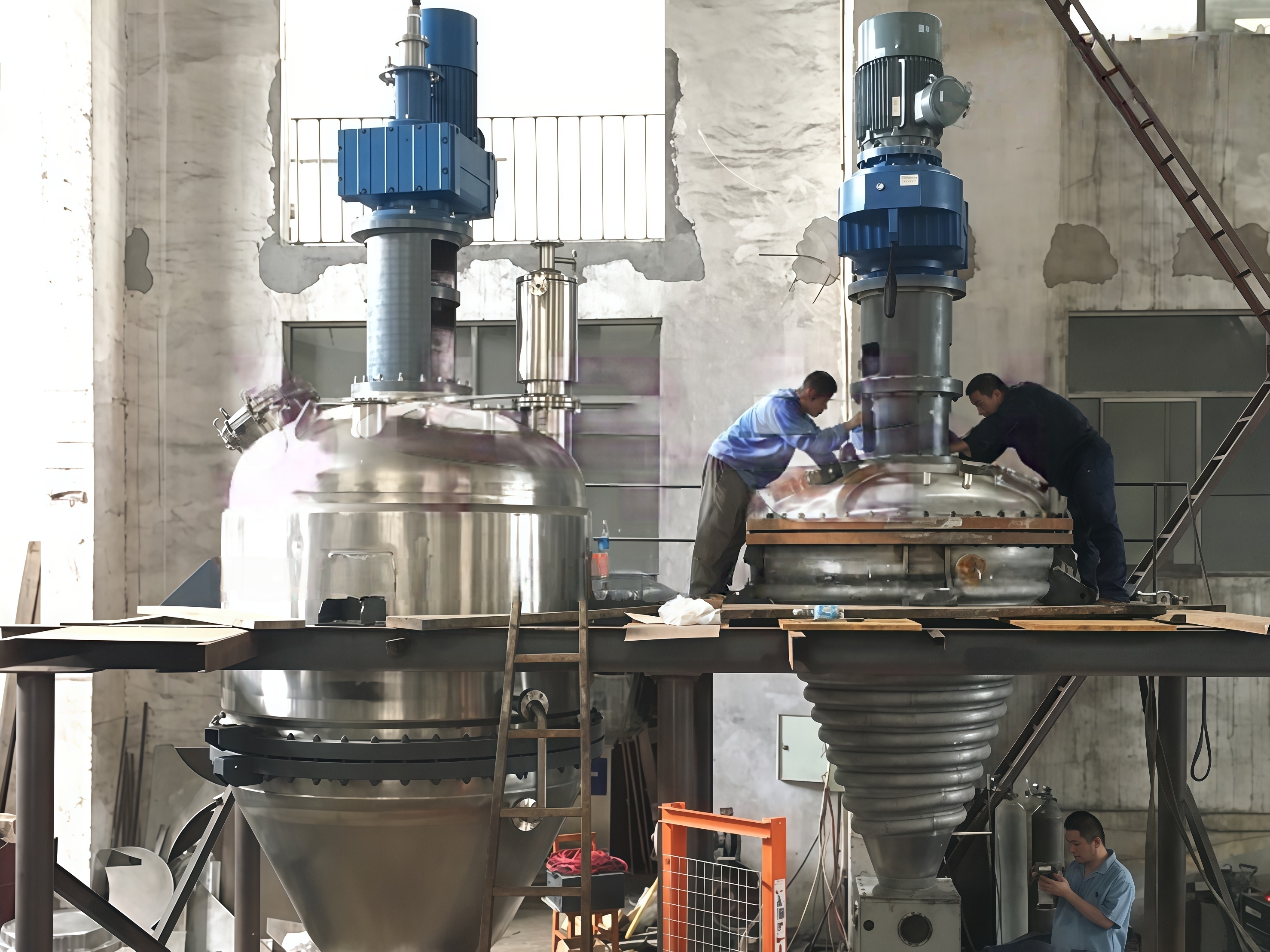
The current production equipment for synthetic vitamin fine drying packages generally uses 10,000L type filter-washing-drying three-in-one machines, with each batch of finished synthetic vitamin production ranging from 1,000 to 1,200kg, and the entire process takes 10 to 12 hours.
In a synthetic vitamin production line with an annual output of 3,000 tons, six 10,000L type filter-washing-drying three-in-one machines are needed to meet the process requirements. However, by using two sets of high-efficiency filter-washing-drying units consisting of 10,000L type conical filter-washing two-in-one machines connected in series with 3,000L type internally heated screw ribbon single-cone dryers, the above production capacity can be achieved. The equipment investment is only about 45% of the 10,000L type filter-washing-drying three-in-one process, and the entire process time is shortened to 2 to 4 hours. The addition of an online vacuum crushing device in the unit avoids agglomeration and caking during drying, shortens the drying time, and ensures the uniformity of the material. The conical filter is less prone to clogging, reducing the safety risks during equipment maintenance and reducing the number of operators. The annual economic benefit increase is over 5 million yuan. Due to the closed operation of the equipment, product quality is improved, and the floor space is small, indicating that the use of high-efficiency filter-washing-drying units has achieved good economic and environmental benefits, and the production is more in line with GMP requirements and standards.
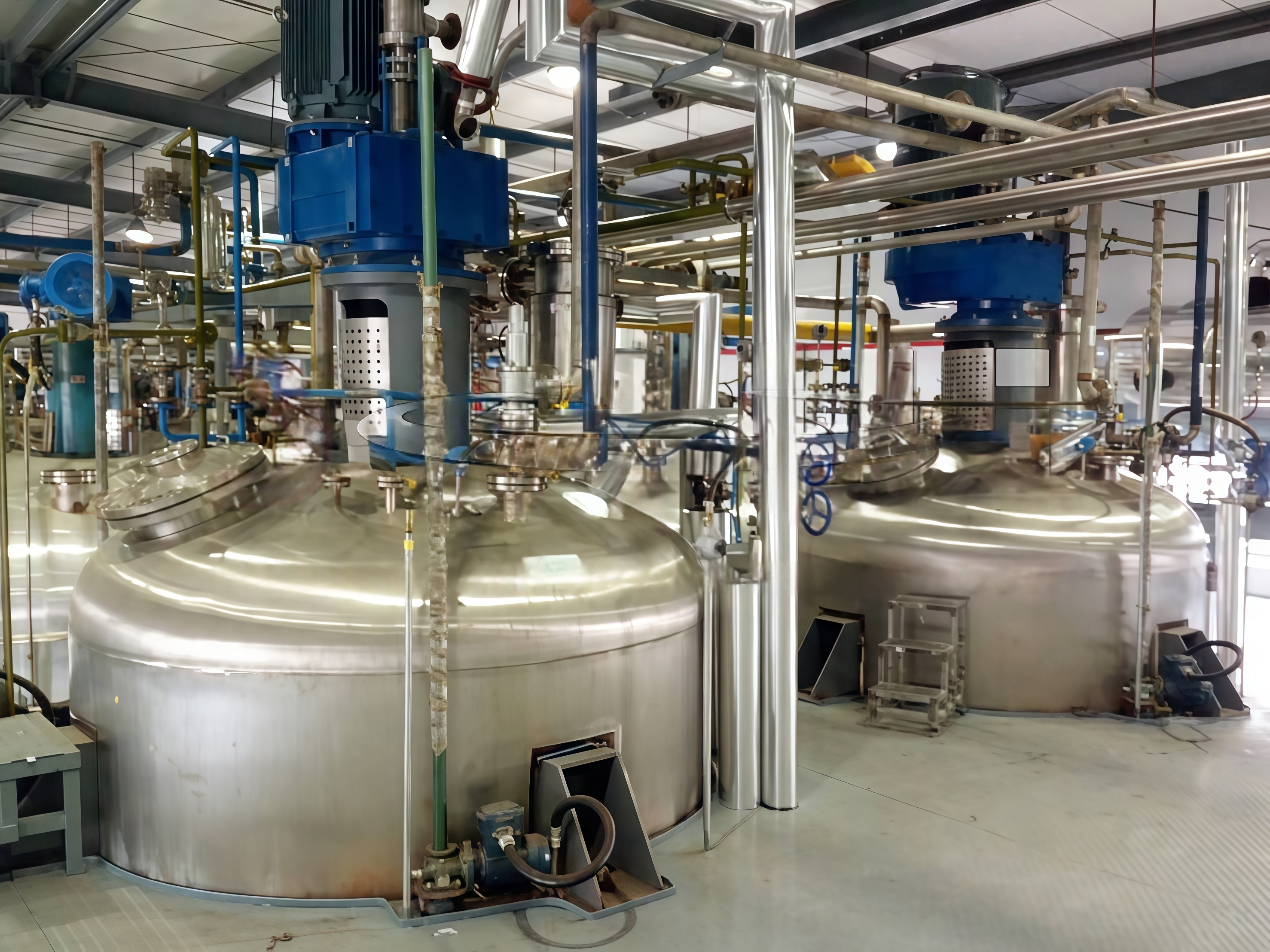
Wuxi Shuangrui is committed to promoting technological innovation in closed-loop circulation dryers and multi-functional filtration, washing and drying machines, and values the full trust given by customers. Intellectual property rights are the lifeline of both Shuangrui Machinery and its customers. At Wuxi Shuangrui, we adhere to the principle of honesty and dedication as the foundation of our business, and we have zero tolerance for infringement. We resolutely crack down on any criminal acts that infringe upon intellectual property rights. This is the highest responsibility, obligation and commitment of Wuxi Shuangrui. We must sincerely repay the trust of our customers and completely eliminate any infringement.


 备案号:备案号:苏ICP123456789


