Welcome to the official website of Wuxi Shuangrui Machinery Co., Ltd!
Tel:0510-83451680
The single-cone vacuum dryer is a new type of dryer that integrates mixing and drying. It features a simple internal structure, easy cleaning, complete discharge of materials, simple operation, reduced labor intensity and improved working environment. During the daily use of this equipment, due to the influence of various loads, corrosion and other factors, its operating condition deteriorates and the safety risk increases. It is prone to dust deflagration and water hammer in the jacket, which can lead to equipment explosion and other dangers. Therefore, to ensure product quality and safe production, during the use of this equipment, operations must be strictly carried out in accordance with the operation instructions to reduce or eliminate personal injuries and equipment damage caused by misoperation or other factors among employees during production operations.
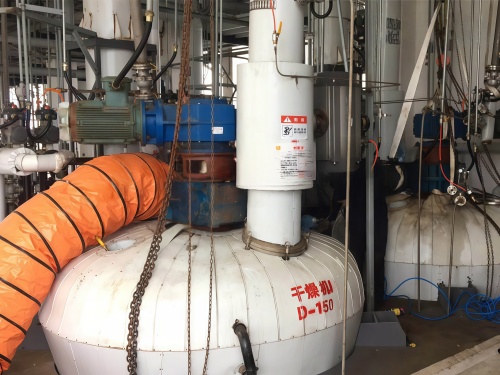
Basic operation and maintenance of single-cone vacuum dryer
Before using the single-cone vacuum dryer, a thorough inspection is necessary. This is the first and crucial step for safe operation. Only by identifying problems before use and solving them in a timely manner can accidents be prevented.
(1) It is necessary to check whether all components of the entire machine are loose and whether the tightness of the belt is appropriate. If any loose components or abnormal belt are found, the motor belt should be tightened and replaced in time.
(2) Start the vacuum pump and check whether there is any leakage at the pipe connections and in the stuffing box. Check whether the sealing of the feeding port is good and whether the vacuum gauge responds sensitively. If leakage is found at the pipeline, replace the sealing gasket and other accessories in time. If the metering instrument does not act, check whether the instrument is damaged or inspect the inside of the cone under the shutdown state. Check whether the vacuum sand core is blocked by accumulated materials and clean it.
(3) Check whether all electrical control instruments, buttons and indicator lights are normal. Check if the grounding wire is in good condition and whether there is any leakage or short circuit. If any abnormality is found, report it to the superior manager immediately and have the electrician inspect and maintain the electrical system.
(4) Check that the interior of the device is thoroughly cleaned. Jog to check that the rotation direction of the cone is correct and the idle sound is normal. Only when there are no abnormalities can the vehicle be started for use.
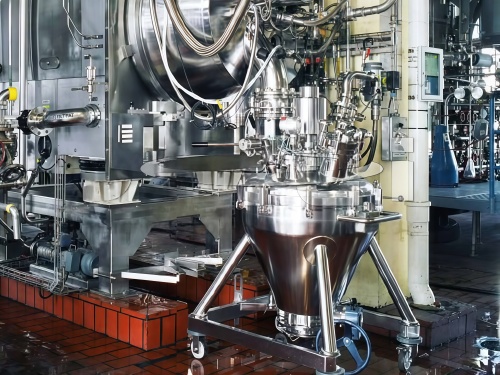
Precautions for using single-cone vacuum dryer
(1) During the operation of the equipment, operators must not leave their posts. If any abnormal situation is found, the equipment should be stopped immediately for handling.
(2) Operate strictly in accordance with the process requirements. Do not run at excessive temperature, overload or pressure.
(3) The temperature of each bearing during operation shall not exceed 60℃.
(4) Keep all sealing parts intact, without any oil, water or steam leakage.
(5) Whether the equipment grounding is intact and whether there is any breakage in the grounding wire;
(6) After the drying shutdown is completed, sufficient time should be given for the dust in the single cone cavity to settle. Generally, it is required that the machine should be stopped and stand still for no less than 30 minutes before discharging to facilitate the elimination of static electricity.
(7) During the operation, the material should be discharged slowly, and care should be taken to avoid dust flying and the leakage of the medicine onto the ground.
The occurrence and prevention of steam water hammer in single-cone vacuum dryers
The occurrence of steam water hammer in a single-cone vacuum dryer is due to incomplete water drainage in the jacket. This is because when steam enters and comes into contact with the low-temperature condensate water, condensation occurs, and the volume of the steam undergoes an immediate and significant change. When steam loses heat, it turns into condensate water, whose volume is nearly 1,000 times smaller than that of steam. During the condensation process of steam, due to the reduction in volume, a temporary vacuum state is formed. Therefore, the condensate water in the jacket will be sucked into this vacuum space. This situation will result in water hammer. When water hammer occurs, the pressure increase may be many times the normal pressure, subjecting the jacket material to significant stress. The repeated changes in pressure can cause vibration of pipelines and equipment. In severe cases, it may lead to damage to pipelines, pipeline accessories and equipment, and even cause cone explosions, resulting in accidents.
To prevent water hammer, it is essential to ensure that the condensate water in the jacket of the double-cone dryer can be discharged in a timely manner. Measures such as installing steam traps at the corresponding positions should be taken to promptly drain the water in the jacket, preventing water vapor from coming into contact with water and causing water hammer. Secondly, regular inspections of the double-cone jacket should be carried out, especially at the weld seams. It is recommended to conduct thickness checks every six months. Any abnormalities found should be repaired or the jacket should be discontinued in a timely manner.
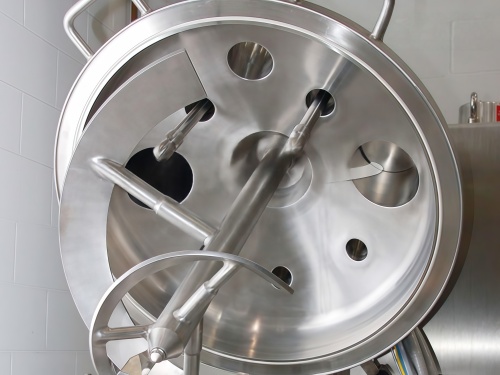
Static electricity elimination and prevention for single-cone vacuum dryers
How to ensure the discharge of static electricity during the operation and discharging of single-cone vacuum dryers and reduce the occurrence of dust explosion accidents caused by static electricity accumulation is also an important concern in the use of single-cone dryers.
When the single-cone dryer is drying and mixing materials, the dust and materials inside the cone rub against each other, resulting in the generation of static electricity. The static electricity carried by the dust in contact with the inner surface of the cone can be discharged, but the static electricity carried by the dust material suspended in the cone cannot be discharged in time, and it is very likely to cause dust explosion and combustion when discharging materials. To eliminate this danger, the following points need to be observed when operating this equipment:
The area where the single-cone vacuum dryer is located should be set with an appropriate humidity range, such as a humidity greater than 50% to facilitate the elimination of static electricity. The site should be cleared in a timely manner to prevent dust accumulation and reduce dust aggregation.
(2) Anti-static measures for the human body need to be installed. Personnel directly in contact with single-cone discharge materials should wear anti-static work shoes, and the gloves for handling dusty materials during discharge should be made of anti-static material. When personnel perform discharge operations, they should first touch the human body static electricity discharge instrument to discharge the static electricity on the human body. Or at the entrance of the escalator, a grounding metal rod should be set up Or leave a 1-meter-long exposed metal surface on the grounded metal railing. Before personnel operate, they can first touch the metal rod to conduct away the static electricity carried by their bodies. All fabric, packaging bags and other materials that come into contact with dusty materials should be made of anti-static materials.
(3) Before use, it is necessary to confirm the static electricity discharge of the equipment and facilities. All the equipment must have reliable static electricity discharge facilities. The grounding of rotating objects can be achieved by using conductive grease or dedicated grounding facilities. For instance, in an environment free from explosion and fire hazards, slip rings and brushes can be employed for grounding. The anti-static grounding brushes and protective covers of the belt-driven units and their belts should all be grounded. When the mobile material carts, tools, material shovels, metal material barrels, and loading bags used in conjunction with the single cone are in use, they should also be connected at the same potential and effectively grounded.
(4) It is clearly stipulated that before discharging materials into the single-cone dryer, there must be sufficient idle time for the suspended dust to fully settle. The idle time should be set to be no less than 30 minutes to facilitate the elimination of static electricity.
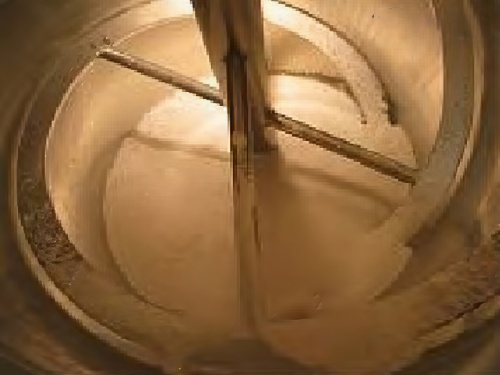

We provide design, research and development, production, and technical services for crystal filtration, washing, and drying equipment, and are committed to undertaking refining and purification projects for fine chemicals, pharmaceuticals and their intermediates, flammable, explosive, and highly toxic special chemicals.
Welcome to contact us!
Tel:13861731823

 备案号:备案号:苏ICP123456789


