Welcome to the official website of Wuxi Shuangrui Machinery Co., Ltd!
Tel:0510-83451680
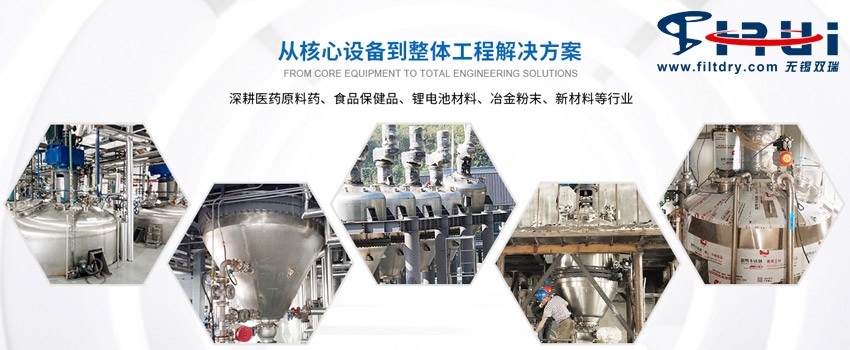
The conical three-in-one filtration, washing and drying system has many advantages. It can complete various operations such as reaction, extraction, crystallization, filtration, washing, repeated washing, filtration and drying in a fully enclosed state within one device, thus significantly shortening the process flow and greatly saving investment in factory buildings, floor space, equipment, process pipelines, valves, etc. It is particularly suitable for processing flammable, explosive, toxic or highly toxic materials, or materials that are harmful to the human body, as well as fresh and delicious foods, biological products, medicines, etc. that are not allowed to be contaminated. This machine can conveniently and directly obtain finished products in a fully enclosed state within one device. It not only avoids the trouble caused by the connection and material transportation among several separate unit devices such as reaction, filtration, washing and drying, but also reduces the loss and waste of materials to zero.
The user of the three-in-one equipment should formulate the operation, maintenance and upkeep procedures for the equipment in accordance with the user manual and process operation requirements of the three-in-one equipment. The after-sales engineer of the three-in-one equipment manufacturing factory needs to
In addition to on-site installation and commissioning of the equipment, it is also necessary to provide training for the operators and maintenance personnel using the manufacturer's equipment, so that they can master the operation, use and daily maintenance and care precautions of the three-in-one equipment.
Key points to note for the conical filtration, washing and drying three-in-one operation
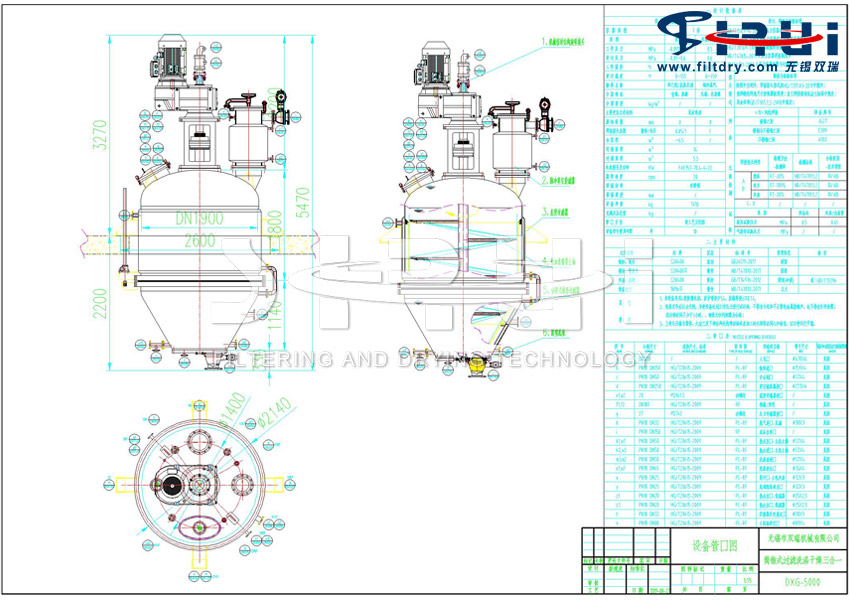
For three-in-one equipment with explosion-proof requirements, a replacement process operation needs to be carried out before feeding. First, evacuate the air from the three-in-one tank, then add nitrogen to it. When the pressure reaches the set value, vent it through the vent port. Repeat the above steps until the oxygen content detected in the tank meets the process requirements. The replacement process flow is shown in Figure 2.
(2) During the vacuum drying process of the three-in-one equipment, to maintain the balance of the pressure difference between the upper and lower parts of the filter medium, vacuum valves and balance valves need to be installed in the vacuum process pipeline. When the vacuum valve and the balance valve adopt pneumatic or
When using electric valves, a safety interlock design should be carried out for the electrical control program. The vacuum valve should only be opened when the balance valve is fully opened and the program receives a feedback signal, and the balance valve should only be closed when the vacuum valve is fully closed and the program receives a feedback signal. When the vacuum valve and balance valve are operated manually, the operator should strictly follow the procedures to prevent the filter medium of the equipment from being damaged during the vacuum drying process. The commonly used filter medium is metal sintered mesh. In addition to ensuring the balance of the pressure difference between the upper and lower parts of the filter medium, it is also necessary to avoid the presence of hard objects in the material. Hard objects can scratch the filter medium and the inner wall of the equipment during stirring.
(3) If the discharge valve is operated manually, the safety interlock design cannot be carried out. The operator should strictly follow the operation procedures to avoid dangerous operations under pressure.
(4) The materials that come into contact with the three-in-one equipment are generally S30408, S31603 austenitic stainless steel, S2205 duplex stainless steel, and C276, C22 Hastelloy materials. For three-in-one equipment with diverse products, before replacing the product, the equipment user manufacturer needs to verify whether the material of the three-in-one equipment can meet the process requirements of the product to be replaced. It is necessary to determine the rationality of equipment sharing to avoid equipment corrosion and irreparable economic losses caused by blind production.
Daily maintenance of conical filtration, washing and drying three-in-one
If the daily maintenance of the conical filtration, washing and drying three-in-one is proper, it can reduce maintenance costs, lower product costs and be conducive to improving production efficiency. The daily maintenance of three-in-one equipment mainly includes keeping the surface of the equipment clean, lubricating the equipment components, tightening the screws, and checking the operating conditions of the components, safety accessories, instruments and electrical appliances, etc.
(1) The surface of the equipment is clean
The outer surface of the three-in-one device is matte, polished or brushed, without any burrs and easy to clean. During the cleaning process, keep the outer surface dry to prevent the cleaning solution from seeping into other components of the equipment and damaging the lubrication effect. Do not rinse the upper and lower operation control button boxes, electrical instruments, etc. with water to prevent the burning of electrical components.
The inner surface of the three-in-one equipment is smooth and flat, which is more conducive to cleaning. When the three-in-one equipment in the food or pharmaceutical industry continuously produces the same product or continuously produces several batches at a certain stage, it is advisable to select appropriate intervals to clean the equipment to prevent the appearance and residue of contaminants, which may pose risks to the production of the next batch. When changing batches of pharmaceutical products, the equipment must be thoroughly cleaned. Before replacing the production products with non-specialized equipment, the equipment must be thoroughly cleaned to prevent cross-contamination. The cleaning agent used should not cause any corrosion to the equipment body. The operating procedures should clearly stipulate the types and dosings of the cleaning agent.
(2) Key points for lubrication of equipment components
Before each shift use of the equipment, the stirring paddle of the lifting device should be raised to a higher position, and the lifting device and the stirring shaft should be wiped clean. Apply a small amount of silicone oil for lubrication to form a protective film between the friction pairs and prevent gold
Dry friction occurs between the metal and the metal. Good lubrication can effectively ensure the long-term reliable operation of the guide sleeve of the lifting device.
② For the lubricating oil of the reducer in the transmission device, mineral oil or synthetic oil with viscosity grades of VG220 or VG320 is often selected. Choosing the right lubricating oil can ensure that gears are better lubricated, dissipated and not corroded. The viscosity of lubricating oil is an important indicator for choosing lubricating oil. The viscosity and type of industrial gear oil need to be determined according to the operating conditions. The maintenance manual of the equipment manufacturer should provide data such as the filling amount and viscosity of the gearbox lubricating oil for users' reference.
③ It is recommended to use grease for lubrication of mechanical seal bearings and bushings. Grease is more likely to remain in the bearing housing and bushings than oil. The selection of lubricants at each lubrication point within the three-in-one equipment should take into account factors such as operation and ambient temperature. When the temperature is low, lubricants with relatively lower viscosity should be chosen. In addition, if the lubricant used in the three-in-one equipment is required not to contaminate the product, food-grade or equivalent grade lubricants can be adopted.
(3) The tightening of screws and the operating conditions of components
Except for the welded components, the general components in the three-in-one device are all connected by threads. After the screws are tightened, they may become loose during the long-term operation of the equipment. The loosening of the screws may lead to incomplete sealing of the three-in-one equipment or excessive clearance of certain moving parts, making the equipment unable to operate safely and reliably. Therefore, it is necessary to tighten the loose screws in a timely manner. Such minor tasks require one to be diligent with both eyes and hands, and to detect and handle them promptly.
(4) The operating conditions of components can be judged through two forms: visual inspection and auditory inspection.
Visual inspection mainly checks whether there is oil leakage from the oil cylinder, oil pipes and their joints, and the hydraulic station. Check if the hydraulic oil level is higher than half of the sight glass and if the oil temperature of the hydraulic station is less than 55℃. Check whether the oil level in the reducer housing has reached the specified level, whether there is oil leakage from the reducer oil seal, and whether there is any leakage at each sealing point and each pipe opening during operation. Listening inspection mainly checks whether there are any abnormal noises during the operation of the hydraulic cylinder, gears of the reducer and bearings. Are there any abnormal noises during the operation of mechanical seal bearings and friction pairs? Are there any abnormal noises when other parts of the equipment are in operation?
(5) Safety accessories and instruments
The tank part of the three-in-one equipment is a pressure vessel. To ensure the safety of production operations, safety accessories need to be installed at the pipe openings of the three-in-one pressure-bearing tank. From the perspectives of safety and cleanliness, it is recommended that the safety accessories of the three-in-one equipment adopt rupture disc devices. When the rupture disc operates, it should not produce fragments, and it is recommended to replace it every 1 to 2 years. When safety valves are used as safety accessories for the three-in-one equipment, they should be kept clean to prevent the valve body spring from being adhered by dirt or corroded, and the lead seal should be kept intact. Safety valves need to be regularly inspected and qualified by units with inspection qualifications before they can be used. It is recommended to inspect them once a year.
The pipe opening of the three-in-one tank is generally equipped with a pressure gauge to show the pressure inside the tank. During its use, it should be stopped if the following situations occur: the pointer does not return to zero or becomes loose, the dial glass is broken, the scale is blurred or the lead seal is damaged. The verification and maintenance of pressure gauges must comply with regulations.
(6) Key points for electrical appliance inspection
Check whether all the buttons in the upper and lower operation control button boxes are loose or damaged, and whether the indicator lights are indicating normally.
② Check whether the circuit from the three-in-one equipment to the electrical control cabinet is in good condition and ensure that the equipment is properly grounded.
③ Remove the dust from the electrical components, check whether the wiring of the accessories inside the electrical control cabinet is loose, and whether the contacts, contacts and insulation are in good condition.
④ Check whether all the proximity switches of the three-in-one equipment are loose.
⑤ Check whether the sight lights can provide normal illumination.
⑥ Check whether the pressure sensor, temperature sensor, displacement sensor, etc. are displaying and transmitting data normally.
⑦ Check whether the safety interlock function of the electrical appliance is in good condition.
⑧ Check the humidity in the storage space of the electrical control cabinet. If the humidity is too high, it can also cause rust on the metal parts of the electrical components, which will lead to unreliable operation of the equipment and even malfunctions. If the humidity is too high, dehumidification treatment is required.
Conical filtration, washing and drying three-in-one maintenance and care
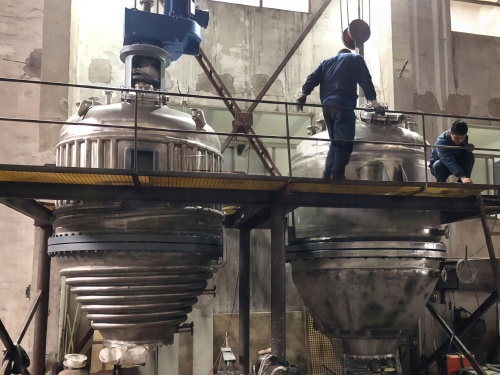
The main purpose of maintaining and servicing the three-in-one equipment is to ensure its good performance, stable operation, safe production, energy conservation and environmental protection, and to provide a reliable guarantee for safe and orderly production. The three-in-one maintenance and care mainly include the following items:
(1) Clean the gearbox of the reducer, replace the bearings, oil seals and lubricating oil, and check the wear of the gears. Whether the motor coil is aged.
(2) Replacement of hydraulic oil in the hydraulic station and oil seals in the hydraulic cylinders.
(3) Replacement of the copper sleeve of the lifting device.
(4) Replacement of mechanical seal bearings and friction pairs.
(5) Replacement of sealing rings and gaskets.
(6) Replace the fastening bolts, screws and nuts.
(7) Replacement of electrical components, switches and buttons.
The three-in-one equipment after maintenance should have the following conditions:
It operates stably and meets the requirements of the production process.
(2) The sealing, transmission devices, etc. can meet the design and specified requirements, and there are no abnormal sounds or noises during the operation of the equipment.
(3) All components are complete and the safety protection devices are operating well.
(4) The degree of wear and corrosion of the three-in-one tank wall did not exceed the specified requirements.
(5) The program of the electrical control system operates stably, and the instruments and meters are safe and reliable.
(6) The hydraulic system is normal, safe and reliable.
(7) The appearance of the equipment is clean and tidy. The automatic interlock protection and safety devices, safety accessories and electrical interlock devices of the equipment are complete and in good condition.
During the production process of conical filter washing and drying machines, various problems and malfunctions may occur. Formulating scientific operation, maintenance and upkeep procedures can not only eliminate some of the problems encountered by the equipment during the production process, but also nip accidents in the bud, avoiding economic losses caused by operational errors or lack of necessary maintenance.
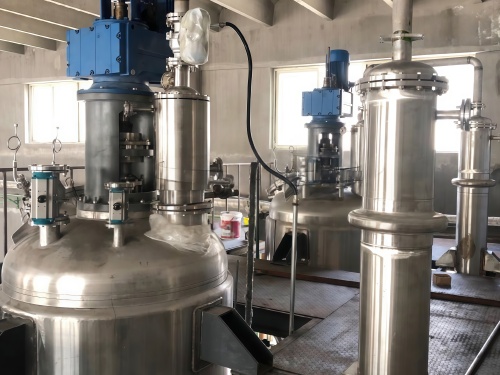
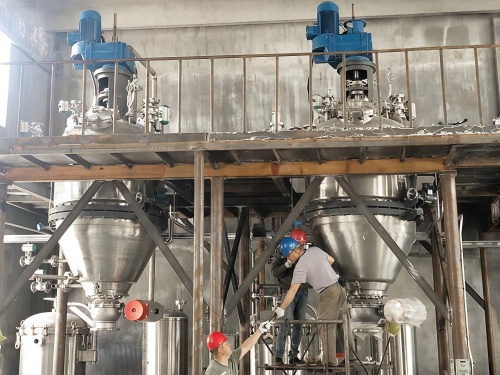

We provide design, research and development, production, and technical services for crystal filtration, washing, and drying equipment, and are committed to undertaking refining and purification projects for fine chemicals, pharmaceuticals and their intermediates, flammable, explosive, and highly toxic special chemicals.
Welcome to contact us!
Tel:13861731823

 备案号:备案号:苏ICP123456789


