Welcome to the official website of Wuxi Shuangrui Machinery Co., Ltd!
Tel:0510-83451680
In recent years, with the vigorous development of the precious metals market, the electric bond industry has grown rapidly, and the social demand for gold and silver salts has been continuously increasing, promoting the prosperity of the gold and silver salt industry. Most domestic rare and precious metal companies previously adopted a relatively primitive manual workshop-style production method, with many manual participation links. Now, to increase production, the number of workers must be increased, which cannot effectively reduce costs. At the same time, due to the numerous manual operations on site, such as the addition of raw material cyanide, the transfer of products during paint washing, dissolution, drying, and packaging processes, etc., considering that both raw materials and products are highly toxic chemicals and the product value is relatively high, manual production is prone to accidents and material waste, thereby increasing production costs and making it difficult to form effective market competitiveness. It has restricted the further development of the company.

Crystallization and drying are crucial steps in the production of gold and silver salts, directly affecting the quality fraction of the products. The previous production process adopted by Yunnan Tin Copper Industry was to separate crystallization and drying into two independent production steps. The crystallization process was carried out first, and the obtained crystals were transferred to the drying process. However, in the actual production process, many problems were exposed, which affected the yield and quality of the products, mainly manifested in the following aspects:
There are too many process flows, which increases the difficulty of control. In the production of gold salts, the purity of gold salts crystallized in one go cannot meet the mass fraction required for high-quality gold salts. To improve the product quality of gold salts, recrystallization must be carried out.
(2) Its production process involves the initial crystallization in the crystallization equipment, followed by paint washing and filtration, heating and dissolution, and then entering the second crystallization equipment through pipelines for recrystallization. The obtained crystals are then transferred to the drying equipment for drying. Gold salt products need to be constantly conveyed in different equipment during the crystallization and drying stage alone, and the entire process is rather complicated, which adds difficulty to the control. Although the crystallization and drying of silver salt only require one crystallization process, it is not advisable to separate these two steps, which reduces production efficiency.
(3) The conveying process of materials is highly prone to waste and pollution. During the crystallization and drying process, especially the crystallization of gold salts, crystallization involves cooling the concentrated liquid at a relatively high temperature to obtain crystals, while recrystallization is the process of heating and dissolving the crystals. There is a significant temperature difference between each device. When the solution is delivered to these devices through pipelines, the solution at a relatively high temperature is very likely to crystallize inside the pipelines, causing waste and even clogging the pipelines. Moreover, during the transportation of materials, there will also be residual liquids in containers and pipelines, leading to waste and pollution. Gold and silver salt products themselves are valuable items. The waste and pollution of materials will cause a large amount of losses to manufacturers.
(4) The maintenance cost of the system is high. According to the original method of Yunnan Tin Copper Industry for crystallization and drying, a large number of devices were used and the control process was rather complex. This inevitably required an increase in human and material resources to ensure the stable operation of the system, thereby raising labor costs. Moreover, for a control system, the failure rate is often related to the complexity of the system. The traditional crystallization and drying production process has a low degree of integration and a relatively complex production process. Therefore, manufacturers have to spend a lot of energy and funds to eliminate faults, which leads to a relatively low production efficiency.
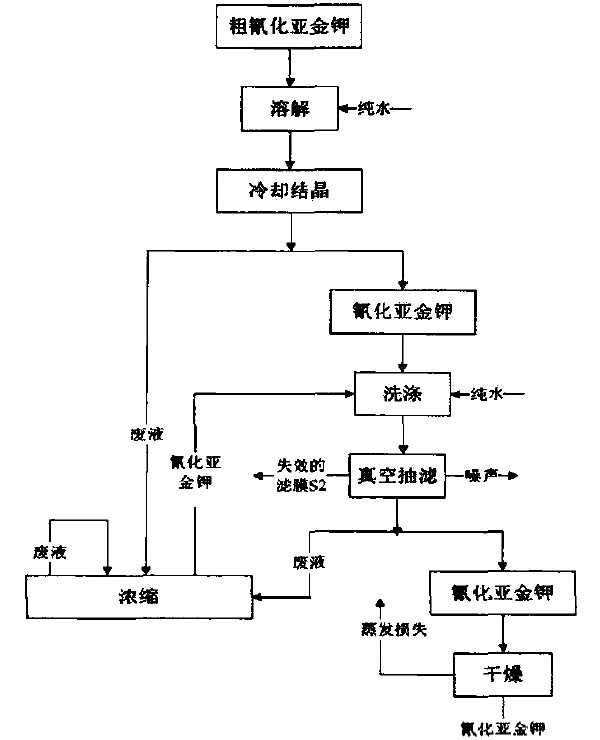
Improvement of production processes for rare and precious metals such as gold and silver salts
Based on on-site investigations of the production lines of several gold and silver salt manufacturing enterprises, especially in-depth research on the human production workshops of Yunnan Tin Copper Industry and Fujian Zijin Precious Metals Company, an automated production line for gold and silver salts was designed. With the aim of enhancing the degree of automation in the production of gold and silver salts, improving production efficiency and product quality, the following work was carried out:
(1) Select a highly implementable production process for gold and silver salts and determine the control plan: Through on-site investigation and comparison of the production processes of multiple enterprises and by referring to a large number of literature materials, analyze the advantages and disadvantages of various existing production processes and choose an effective process flow. And determine the corresponding control scheme in combination with the process flow.
(2) Selection and design of control system hardware: Based on the selected production process flow and in combination with the determined production control plan, complete the selection of production process equipment and control modules, design the network structure of the control system and determine its communication mode. According to the needs of safe production, select toxic gas detection equipment and design a monitoring plan.
(3) Design of control system software: Based on the technical requirements of the production process, complete the program design and the development of the upper computer configuration software to achieve real-time monitoring of the gold and silver salt production processes, automatic control of the production flow, and remote control of on-site equipment.
(4) Conduct in-depth research on key technological processes and propose optimization solutions: Based on the actual production needs, optimize the design of production process control and verify its feasibility through theory and simulation.
In response to the problems existing in the production of rare and precious metals, Yunnan Tin Copper Industry, after extensive investigation, adopted the fully automatic crystallization, filtration, washing and drying integrated machine developed by Wuxi Sungrui. This solution integrates multiple production processes such as crystallization, filtration, washing and drying. All the crystallization, filtration, washing and drying processes of gold and silver salts are carried out in one device, reducing the material transfer process. Improve production efficiency.
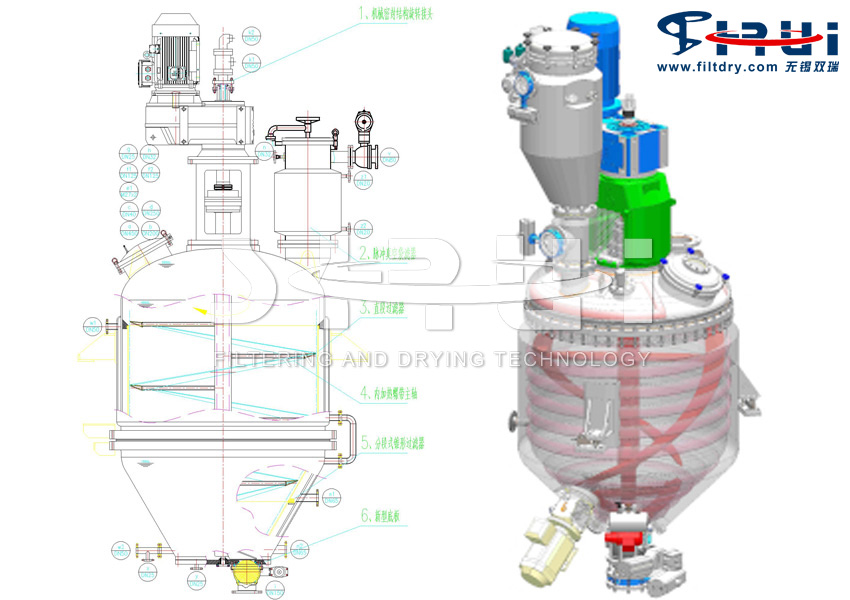
The three-in-one structure and working principle of refining, filtering, washing and drying of rare and precious metals
The three-in-one machine for refining, filtering, washing and drying rare and precious metals adopts a cylindrical and conical structure. Heating jackets are set on the cylindrical body and the lower cone, which can heat or cool the materials. Inside the multi-functional machine, there are hollow shafts and variable-angle and variable-lead hollow spiral stirring devices for stirring and lifting the materials, and the materials are pushed out when discharging. A relatively complex conical filtering device is set in the lower cone. At the bottom of the equipment, there is a specially designed quick discharge device without dead corners or a pneumatic discharge ball valve without dead corners.
The advantage of the fully automatic crystallization, filtration, washing and drying integrated machine lies in its multi-functionality. Crystallization, filtration, washing and drying are all completed on one machine, reducing intermediate links. More importantly, the entire process is carried out in a closed space, reducing the interference of the external environment, thereby reducing the contamination of the product by external factors and improving product quality. In addition, the adoption of the crystallization and drying integrated machine reduces the number of devices, enhances the degree of automation, and significantly lowers the labor intensity.
Advantages of the three-in-one technology for refining, filtering, washing and drying of rare and precious metals
From the actual operation and use of the multi-functional equipment for cylinder and cone filtration, washing and drying in processing various materials, many advantages can be found, mainly manifested as:
(1) Multi-functional in one machine, it can complete various operations such as reaction, extraction, filtration, repeated filtration and washing, and drying within one machine, and directly obtain the finished product.
(2) It has a large operational flexibility and can adjust the operation cycle by regulating the filtration pressure difference, rotational speed, and screw extrusion lead, etc., to adapt to changes in process conditions.
(3) This machine can form a very thin filter cake on the surface of the filter medium or perform filtration without a filter cake. The filtration rate per unit filtration area is very high, so the equipment is small and compact.
(4) Fully enclosed system, with a very good operating environment, is particularly suitable for handling toxic, flammable, explosive and other dangerous products.
(5) It can both concentrate and filter. Especially when it is necessary to wash the materials, the materials can be concentrated first and then thoroughly washed in a suspended state, followed by filtration. This can reduce the handling of materials, minimize waste, and eliminate the need for slurry during washing. The quality of the processed products is very high.
(6) It can be used for three operations: reaction, filtration and drying, enabling the functions of the three unit devices to be accomplished on this single device. As a result, the equipment cost, floor space, labor intensity and energy consumption are all significantly reduced.
(7) This machine has low power consumption. The moisture content of the filter cake it extrudes is generally lower than that of the three-in-one plate type, and it is also convenient to operate.
The degree of automation in the production process of domestic rare and precious metal manufacturers is relatively low. Moreover, the raw materials and intermediate products required in the production process are all highly toxic, making it difficult to achieve precise control of the production process. The fully automatic crystallization, filtration, washing and drying integrated machine developed by Wuxi Sunray meets the requirements of fully enclosed production process control and fully automated technology for gold and silver salts. It is of great significance for improving the quality of gold and silver salt products and has also promoted the vigorous development of the gold and silver salt industry.
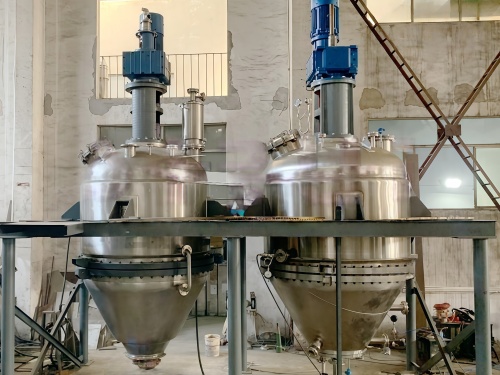
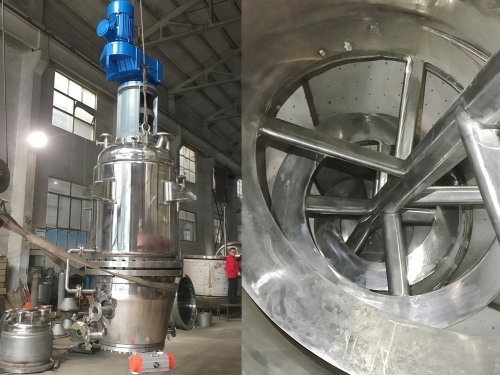

We provide design, research and development, production, and technical services for crystal filtration, washing, and drying equipment, and are committed to undertaking refining and purification projects for fine chemicals, pharmaceuticals and their intermediates, flammable, explosive, and highly toxic special chemicals.
Welcome to contact us!
Tel:13861731823

 备案号:备案号:苏ICP123456789


