Welcome to the official website of Wuxi Shuangrui Machinery Co., Ltd!
Tel:0510-83451680
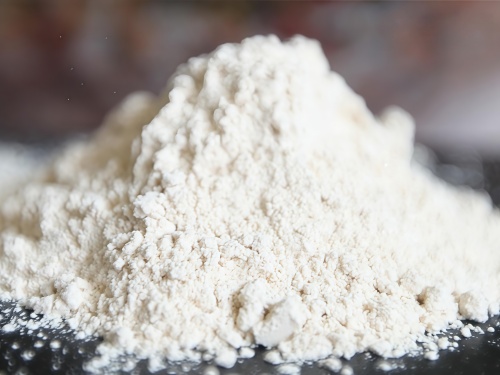
Rice protein is mainly composed of four types of proteins: albumin, globulin, alcohol-soluble protein and gluten. The main protein in rice residue is endosperm protein, which consists of albumin (4% - 9%), salt-soluble globulin (10% - 11%), alcohol-soluble gluten (3%) and alkali-soluble gluten (66% - 78%). The quality of rice protein is recognized as standing out among cereal proteins. It is rich in essential amino acids, and the content of the limiting amino acid lysine is higher than that of other cereal proteins. Moreover, the amino acid composition pattern is close to the recommended pattern of the WTO/FAO, making it easy for the human body to digest and absorb.
Among cereal proteins, the value of rice protein mainly lies in its low allergenicity, no pigment interference, mild taste and high nutritional value. The amino acid composition of rice protein is balanced and reasonable, and its amino acid content is high. It is recognized as a high-quality food protein. Its biological value (BV) and protein value (PV) are both the highest among grain proteins, and its nutritional value can be compared with that of eggs, milk and beef. In addition, rice protein is an antigenic protein that does not cause allergic reactions and is very suitable for making infant food. Recent studies have also found that rice protein has some health benefits, such as reducing the content of serum cholesterol.
Analysis of the Separation and Purification Production Process of Rice Protein
It is precisely because rice starch and rice protein have many advantages in industrial applications that the international market's demand for high-purity rice starch (with a protein dry basis mass fraction lower than 0.5%) and high-purity rice protein (with a protein dry basis content higher than 90%) is increasing. However, whether it is rice starch or rice protein, in products with them as ingredients, functional properties such as water retention, oil absorption and foaming are often more important than nutritional values such as amino acid composition. The performance of functional properties is often affected by their purity. Because the starch and protein in rice are closely combined and difficult to separate, the choice of separation and extraction methods for rice starch and rice protein directly affects the functional characteristics of the product.
The separation process for extracting rice protein from rice includes cleaning and soaking the rice, removing sand, grinding into slurry, concentrating and drying the rice protein. It also involves fine grinding of the ground rice slurry and multi-stage separation using a disc separator, as well as enzymatic treatment of the protein slurry (including amylase, cellulase and lipase). The purification process of alkaline rice protein includes alkaline solution soaking, grinding into pulp, stirring extraction, separation, acid precipitation, separation and drying, which is suitable for industrial production. However, as the utilization of the separated starch slurry for extracting and separating starch was not taken into account, the development and utilization plan for raw materials in this process was incomplete, and the raw materials were not fully utilized either.
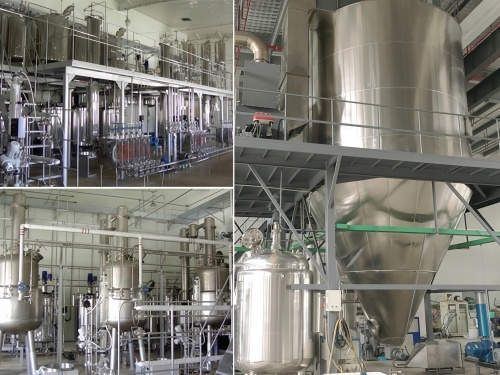
The production process of filtration, washing and drying machine for the separation and extraction of high-purity rice protein
Considering the shortcomings of the current production process for the separation and purification of rice protein, such as long production cycle, high cost, and low product purity, especially the difficulty in simultaneously obtaining high-purity and high-yield rice protein and rice starch in the same process. In response to the above issues, a high-purity rice protein separation and extraction filtration, washing and drying machine production process is adopted. In the same treatment process, high-purity rice starch and high-purity rice protein are simultaneously produced. After separating the rice protein and rice starch, purification is carried out. Therefore, the purity of the obtained product is relatively high.
The production process of the filtration, washing and drying machine for the separation and extraction of high-purity rice protein involves soaking the rice grains in an alkaline solution, which has a high extraction rate and reduces the high energy consumption of the raw rice being crushed first and then soaked. At the same time, due to the different drying methods, it is more conducive to ensuring the exertion of functional characteristics such as the solubility, foaming property and emulsifying property of the product. The method for co-producing high-purity rice starch and rice protein includes the following steps:
Wash the rice with tap water at a weight ratio of 1:2 to 1:6, and rinse it 1 to 3 times.
(2) Mix the washed rice with a NaOH solution of 0.1% to 0.5% in a solid-liquid ratio of 1:1.5 to 1:2.5, and soak it at room temperature while stirring for 1 to 4 hours.
(3) Grind the rice slurry with a colloid mill to a fineness of 60 to 150 mesh. After sedimentation and separation, the supernatant and sediment are obtained.
(4) Use a filtration, washing and drying machine to adjust the pH of the supernatant obtained from the colloid mill to 4.5-5.5 with hydrochloric acid. After sedimentation and separation, precipitate 2 is obtained. Add amylase or amylase to the obtained precipitate 2, and hydrolyze at 40 ° C - 55 ° C for 10-30 minutes. After sedimentation and separation, precipitate 3 is obtained.
(5) In the filtration, washing and drying machine, add water to precipitate 3 in a weight ratio of 1:2 to 1:8 of the material to water and stir continuously. Settle and separate to obtain precipitate 4. Repeat this step 3 to 5 times until a neutral pH precipitate 4 is obtained. Dry precipitate 4 to obtain high-purity rice protein powder.
(6) The precipitate 1 obtained from the colloid mill slurry was purified with alkaline protease to separate precipitate 5. The pH of precipitate 5 was adjusted to neutral with hydrochloric acid, and then purified with ethanol. After sedimentation and separation, precipitate 6 was obtained.
(7) Add the precipitate 6 to tap water in a weight ratio of 1:2 to 1:6, and repeatedly wash it with water 2 to 5 times. After sedimentation and separation, the precipitate 7 is obtained. Dry the resulting precipitate 7 to obtain high-purity rice starch.
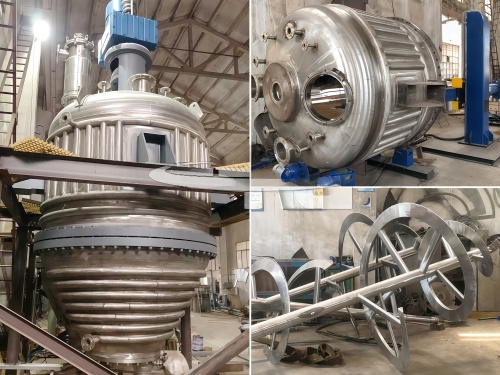
The production process of the filtration, washing and drying machine for the separation and extraction of high-purity rice protein is a low-cost and high-quality method for co-producing high-purity rice starch and rice protein. Its core is to take rice as the raw material and, based on the existing research and development of rice starch and rice protein, develop a new co-production technology for high-purity rice starch and rice protein to solve the existing technical problems to the greatest extent. This method can be used to simultaneously produce high-molecular-weight rice protein (protein purity ≥ 85%, yield ≥ 70%) and rice starch (starch purity ≥ 95%, yield ≥ 70%) with good functional properties while ensuring high product purity.
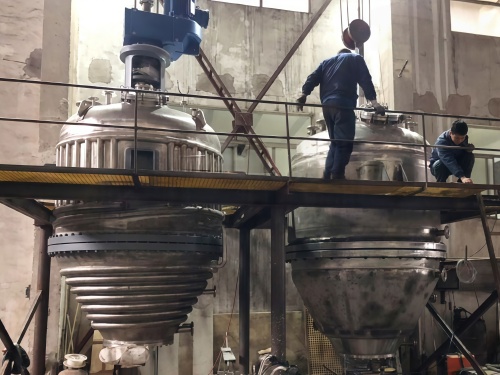
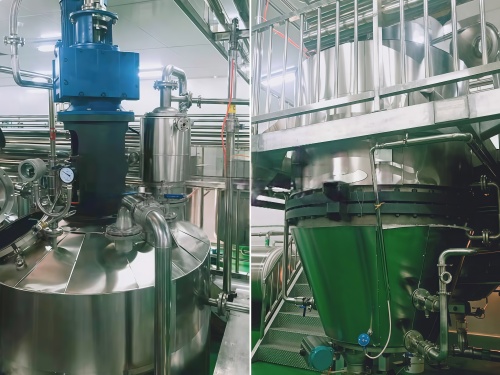

We provide design, research and development, production, and technical services for crystal filtration, washing, and drying equipment, and are committed to undertaking refining and purification projects for fine chemicals, pharmaceuticals and their intermediates, flammable, explosive, and highly toxic special chemicals.
Welcome to contact us!
Tel:13861731823

 备案号:备案号:苏ICP123456789


