Welcome to the official website of Wuxi Shuangrui Machinery Co., Ltd!
Tel:0510-83451680
Polyvinyl acetal (PVB resin) is a white solid particle. The coating film formed by the product has excellent properties such as high transparency, elasticity, toughness, strong alkali resistance, oil resistance and low-temperature impact resistance. Meanwhile, it has excellent adhesion to glass, metal, ceramic powder, plastic, leather and wood. It is mainly applied to the intermediate film of safety glass for automobiles and buildings, anti-rust primer, varnish, wood varnish, printing ink, electronic ceramics and copper clad laminate adhesives.
In 2016, the global demand for PVB resin will exceed 1,000 tons, among which China's demand will account for 25% of the global total. However, at present, the production technology of PVB resin in our country is still not mature. Most of them are low-viscosity PVB resins, and over 80% of PVB resin materials still rely on imports. Therefore, domestic efforts still need to be intensified to develop the production technology of PVB resin and solve the problem of relying on imports for PVB resin. On the other hand, continuously upgrading and transforming the original PVB resin production process to enhance the technical and economic competitive edge of China's PVB resin intermediate film also holds significant practical significance.
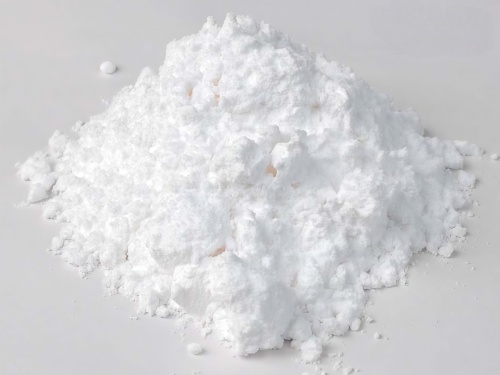
Analysis of the Current Production Process of Polyvinyl alcohol butyral (PVB resin)
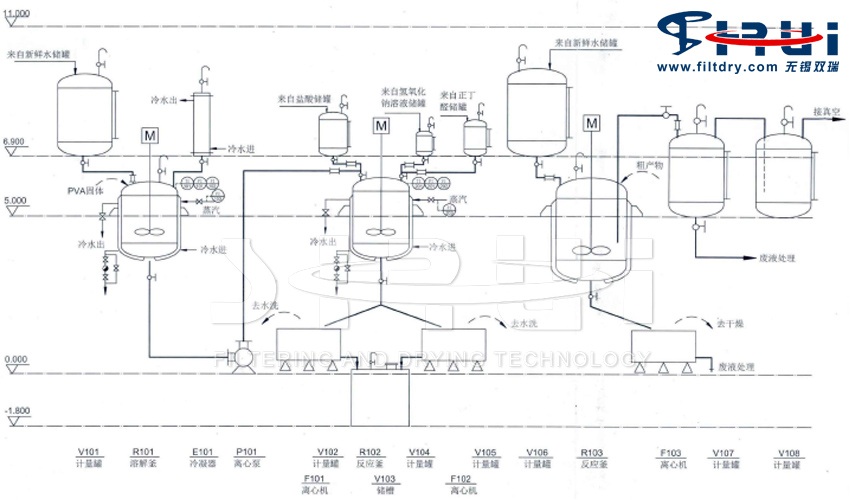
The production process of the original 2,000-ton PVB resin synthesis workshop is shown in the figure. PVA is dissolved by adding water to the dissolution kettle R101 and then transported to the condensation kettle R102 by a pump P101. The condensation and neutralization reactions are completed in the same kettle R102. The coarse filter cake filtered by centrifuges F101 and F102 The mixture is sent to the washing pot R103 by the operator with a trolley for washing. Then, it is vacuum-dried and washed with deionized water, and dried again. This process is repeated for a total of eight washes. After the last wash, the solid-liquid mixture is directly discharged from the discharge port into the centrifuge F103 for centrifugal filtration, and then sent to the drying workshop to obtain the PVB product.
The problems existing in the current PVB resin washing process: It is a consensus among PVB manufacturers that increasing the amount of wastewater discharged from each washing in the washing kettle can correspondingly reduce the number of washing times and water consumption. Some manufacturers adopt the method of vacuuming the washing kettle to try to discharge all the wastewater. The above-mentioned purpose can also be achieved by multiple cycles of water washing and centrifugal dehydration. The specific operation method is to put the water-washed PVB resin into the centrifuge, dehydrate it, and then put it back into the water washing kettle for water washing, and repeat this cycle. However, the labor intensity of this method is relatively high, as the materials need to be constantly transferred between the centrifuge and the water washing kettle.
PVB is an intramolecular acetal compound formed by the condensation reaction of high-molecular functional groups between polyvinyl alcohol and n-butyraldehyde under strong acid conditions. This production method is widely adopted because of its simple process flow, no need for expensive solvents and solvent recovery devices, and low pollution. However, a major factor restricting the development of the PVB industry is the stability of PVB resin quality, and the key to improving resin stability is water washing. It is estimated that about 65 tons of water are consumed for the production of one ton of PVB resin. How to reduce the water consumption in PVB production is an eternal topic of research in the PVB industry. As the requirements for the industrial environment in our country are getting higher and higher, many manufacturers that produce PVB resin by the two-step method are under pressure to save energy and water, which affects the development of the PVB industry in our country.
Overview of Water-saving High-Efficiency PVB Resin Washing Kettle - Cylindrical Cone-type Filtration and Washing Two-in-one Equipment
At present, the two-in-one filtration and washing devices widely used in the fine chemical industry all adopt flat plate sintered mesh filtration inside. Through the dual action of the lifting and rotation of the internal agitator, the solid residues inside are discharged outside the machine. However, the conventional devices not only have poor filtration effects but also are prone to filtrate leakage, and the washing is troublesome for users. It is not conducive to users performing multiple operations. Moreover, the conventional two-in-one filtration and washing system often fails to quickly discharge the filtrate, and it is not convenient for the operator to thoroughly clean the device. It is also prone to leakage and waste of filtrate.
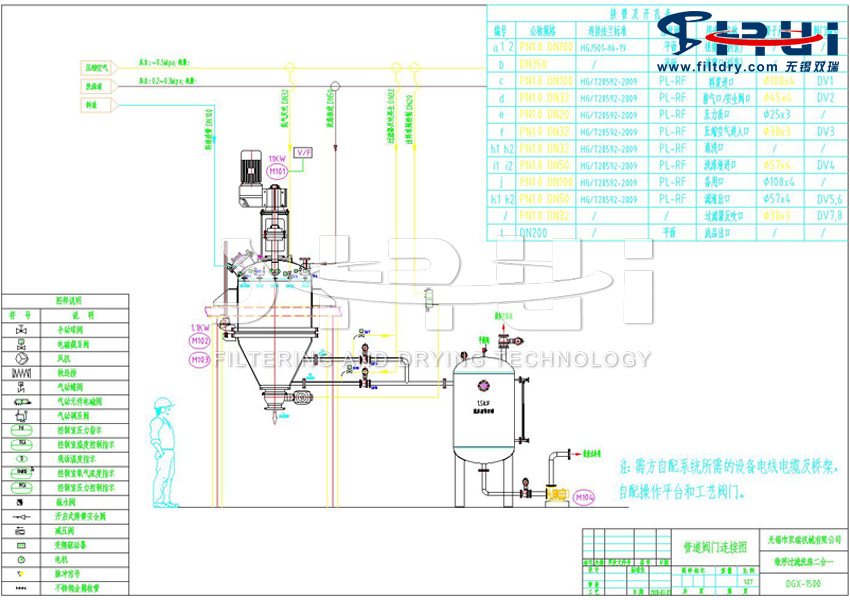
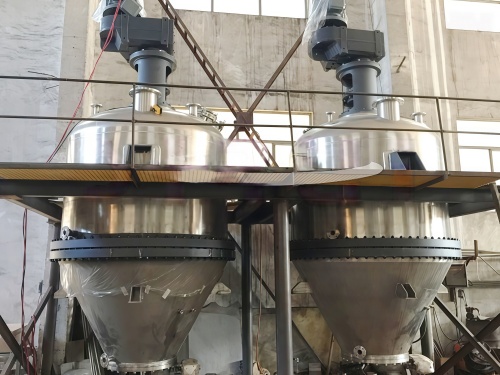
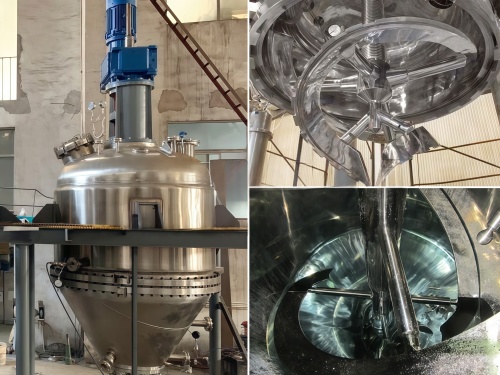
The high-efficiency cylinder-conical filtration and washing two-in-one developed by Wuxi Sungrui features a top cover, cylinder and conical spherical shell connected by flanges to form a closed container. The stirring drive device rotates the central shaft and the spiral stirring device surrounding the central shaft, driving the materials to achieve the stirring operation. The filtering device on the outer side wall of the container can filter the material. The filtrate passes through the filtering device and is collected by the filtrate collection plate, and is discharged from the cylinder through the filtrate outlet. The conical spherical shell at the bottom of the container, in conjunction with the bottom stirring device that fits the inner surface of the spherical structure of the conical spherical shell, can ensure that there are no operational dead corners for the materials inside the container, making the stirring more uniform and avoiding material waste.
The process flow of the polyvinyl alcohol butyral PVB resin water washing kettle
(1) Dissolution: Put PVA into the dissolution kettle for dissolution, and dissolve PVA into a PVA aqueous solution.
(2) Filtration: The PVA aqueous solution dissolved in step (1) is cooled by heat exchange with cold pure water through a plate heat exchanger.
(3) Reaction: The PVA aqueous solution that has been cooled in step (2) is put into the reactor. When the reactor heats the PVA aqueous solution, butyraldehyde and hydrochloric acid are added. The PVA aqueous solution reacts with butyraldehyde and hydrochloric acid in the reactor. After the reaction, the reactants are placed in the stabilizer.
(4) Stabilization: Heat the reactants after the reaction in step (3) in the stabilization vessel.
(5) Insulation: After insulating the reactants from step (4) in the stabilization reactor, transfer them to the water washing reactor.
(6) Water washing: Wash the reactants from step (5) with recycled water more than 5 times. Specifically: First, drain the water to the fixed position in the water washing tank, then replenish the recycled water to the scale line inside the water washing tank, stir and drain to the sewage treatment plant. Repeat the above actions more than 5 times.
(7) Acid washing: Wash the reactants from step (6) twice with deionized water. Specifically, first drain the water to the fixed position in the water washing tank, then add deionized water to the scale line inside the water washing tank, stir and drain to the sewage treatment plant. Repeat the above action more than twice.
(8) Neutralize hydrochloric acid with alkali: Add alkali solution to the reactants in step (7) for neutralization reaction to increase the PH value.
(9) Alkali washing: Discharge the water from the reactants in step (8) into the recovery tank, then replenish deionized water to the scale line of the water washing tank. After stirring, discharge the water back into the recovery tank again. Repeat the alkali washing action until the water conductivity of the reactants in the water washing tank is below 50.
(10) Wastewater recycling: The wastewater generated from the alkali washing process in step (9) is recycled and discharged into the wastewater recycling pool. The recycled wastewater is then used in the next acid washing process.
(11) Spin-drying and drying: Draw the reactants from step (10) into a spin-dryer for spin-drying operation.
(12) Wastewater recycling: The wastewater generated from step (11) of spin-drying and drying is recycled and discharged into the wastewater recycling pool. The recycled wastewater is used in the next acid washing process.
(13) Finished product: Obtain PVB resin powder.
Technical improvement of Polyvinyl alcohol butyraldehyde PVB resin water washing kettle
(1) The outer side of the cylindrical cone-type filtration and washing two-in-one water washing kettle is equipped with a heating jacket, and the heating is carried out by steam. When the PVB aqueous solution is put into the water washing kettle, heating begins immediately. The operation is carried out by heating and washing simultaneously. As the softening point of PVB is between 36 and 45℃, heating it for water washing can facilitate the removal of impurities during the washing process, reduce the frequency and duration of washing, and enhance the efficiency of water washing.
(2) The washing liquid outlet of the cylindrical cone-type filtration and washing two-in-one water washing kettle is set at the bottom of the cone. When the water level drops to the bottom of the pot, open the pressure-reducing valve to completely extract all the water inside the pot, accelerate the water washing efficiency and improve the product quality.
(3) The conical filter of the water washing kettle adopts a segmented design. Through valve control, it can achieve multi-stage independent filtration and segmented reverse blowing washing. The filtered washing liquid is collected in the main pipe and discharged. After being pre-treated by the double-bag filter, it flows into the temporary storage tank.
(4) The high-pressure pump at the bottom of the temporary storage tank conveys the washing liquid to the precision filter for secondary treatment, and then the two output channels are controlled by valves. All the way to the washing liquid inlet at the top of the three-in-one, the materials are preliminarily washed and purified (for reuse). Another path is connected to the washing liquid treatment pipeline and enters the waste liquid disposal process, which can achieve the effect of energy and water conservation, reduce production costs and improve efficiency.
(5) The cylindrical cone-type filtration and washing combined device is an ideal equipment for repeated and multiple washes of materials. After the material is pressed dry in the machine, washing liquid can be added to the top washing liquid inlet. Then, through the stirring of the hollow shaft and hollow screw ribbon, the filter cake is uniformly re-pulped. After the re-pulping is stirred evenly, the material is pressed dry again. If one wash is not enough, multiple washes can be carried out. At this time, just repeat the above steps several times. The operation is convenient and the labor intensity is extremely low.
(6) The cylindrical cone-type filtration and washing two-in-one water washing pot device has a simple structure, novel design and convenient use. Through the setting of the centrifugal pump and the transfer pipe, it can achieve the circulation water washing of PVB liquid materials. By setting the liquid level gauge, not only can the amount of water washing solution added during feeding be controlled to prevent the volume from being too small and failing to achieve the water washing effect It can also monitor the interface between the PVB liquid material and the impurity solution after water washing to prevent the mixed output of impurities and the monitored PVB liquid material.
The polyvinyl alcohol butyrate (PVB resin) product contains hydroxyl groups, which are prone to form hydrates with water, resulting in the need for small amounts and multiple washes of the mother liquor. When the product is washed with water, if the mother liquor is not completely separated, it will seriously affect the risk of the product during use. To reduce the residual amount of mother liquor remaining in the product, the frequency of water washing and the amount of water used can be increased. However, this is not conducive to environmental protection, as the consumption of pure water is huge and each washing takes a long time. The cylindrical cone-type filtration and washing two-in-one water washing kettle, based on the existing equipment, increases the water washing temperature and reduces the consumption of pure water. After recycling and reusing the wastewater from the alkali washing and drying and spin-drying processes, not only is the production cost of PVB resin reduced, but also the amount of wastewater discharged during the production of PVB resin is decreased, achieving an environmental protection effect at the same time.
Wuxi Sunray is committed to promoting technological innovation in crystallization, filtration, washing and drying equipment, and values the full trust given by customers. Intellectual property rights are the common lifeline of Shuangrui Machinery and its customers. At Wuxi Sunray, we adhere to the foundation of our business as honesty and dedication, and maintain a zero-tolerance policy towards infringement. We resolutely crack down on any criminal acts that infringe upon intellectual property rights. This is the supreme responsibility, obligation and commitment of Wuxi Sunray. We must sincerely repay our customers' trust and completely eliminate any infringement.

We provide design, research and development, production, and technical services for crystal filtration, washing, and drying equipment, and are committed to undertaking refining and purification projects for fine chemicals, pharmaceuticals and their intermediates, flammable, explosive, and highly toxic special chemicals.
Welcome to contact us!
Tel:13861731823

 备案号:备案号:苏ICP123456789


